Collagen supplements are everywhere - powders, drinks, gummies, capsules. They promise tighter skin, fewer wrinkles, stronger hair, and a glowing complexion.
But is collagen really the secret to youthful skin and thicker hair? Or is it just clever marketing? Here is what science actually says.

What Is Collagen?
Collagen is the most abundant protein in the body. It provides structure to:
- Skin
- Hair
- Nails
- Bones
- Joints
- Connective tissue
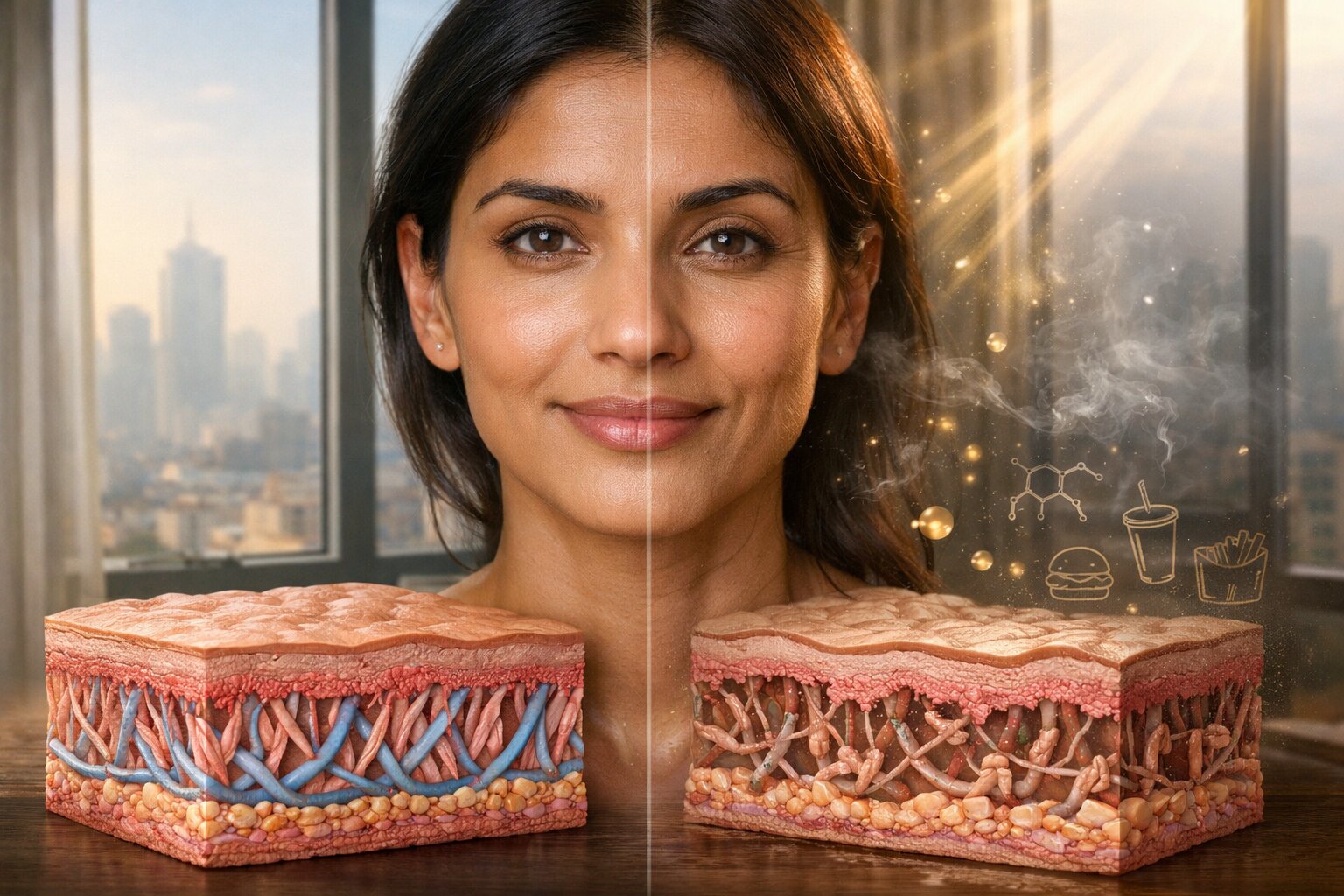
In the skin, collagen helps maintain firmness, elasticity, and smooth texture.
Why Does Collagen Decline With Age?
Starting in your mid 20s, collagen production gradually decreases. This decline accelerates due to:
- Sun exposure and UV damage
- Smoking
- Pollution related oxidative stress
- Chronic stress
- Poor diet
- Natural aging
Reduced collagen leads to fine lines, sagging, and loss of skin elasticity.
Do Oral Collagen Supplements Actually Work?
What Happens When You Consume Collagen?
Collagen supplements are broken down in the digestive system into amino acids and peptides. These are absorbed and distributed throughout the body, not just to the skin.
The key question is whether these peptides specifically stimulate skin collagen production.
Key Point
Collagen is supportive, not transformative. Think of it as nutritional support rather than a stand alone treatment.
What Research Suggests
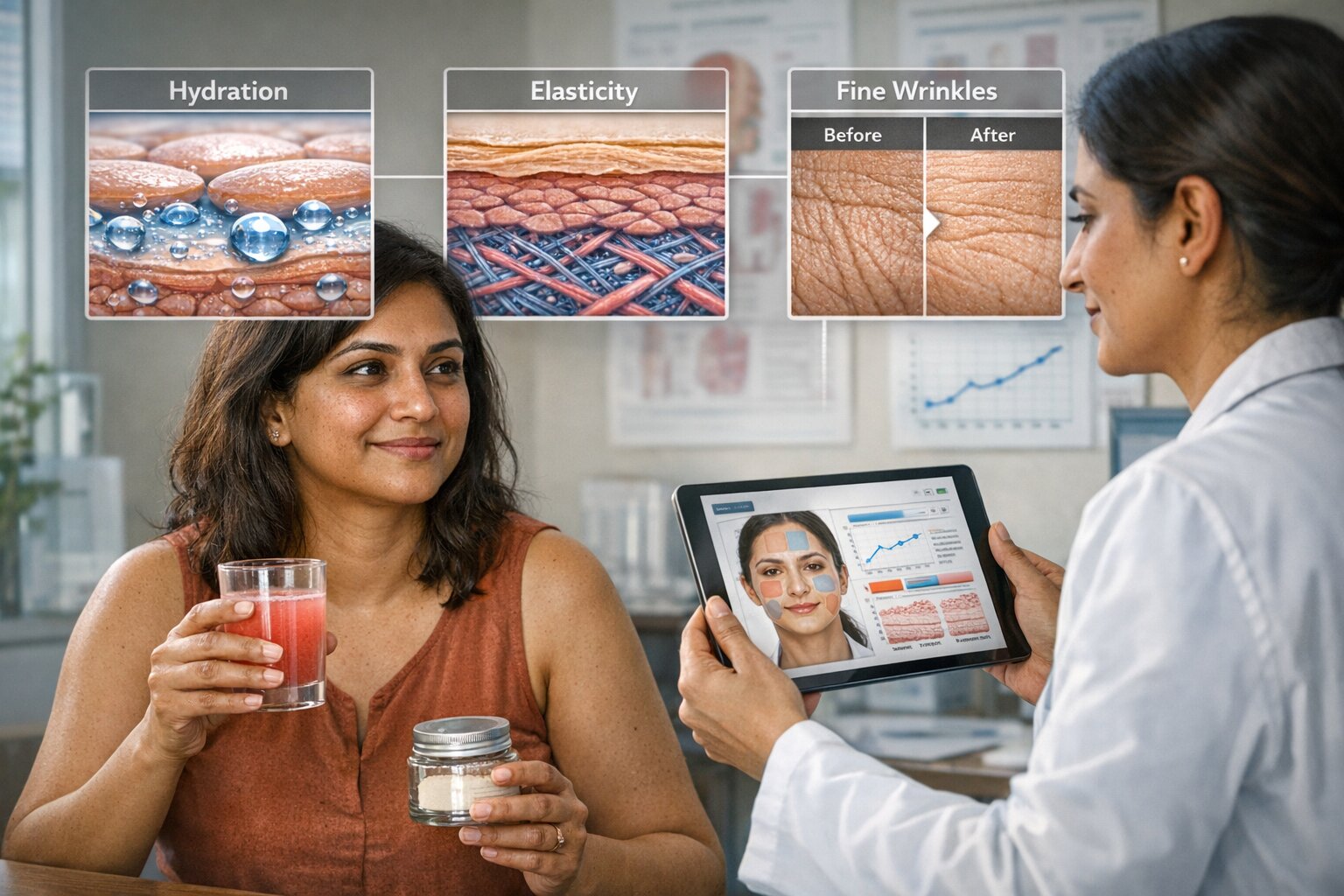
Some clinical studies show that hydrolyzed collagen taken for 8 to 12 weeks may:
- Improve skin hydration
- Slightly improve elasticity
- Reduce fine wrinkle depth
However, improvements are modest, results vary, and long term effects are still being studied.
Collagen for Hair: Does It Help?
Collagen provides amino acids needed for keratin production. However, there is limited direct evidence that collagen supplements significantly improve hair growth.
Genetic, hormonal, and autoimmune hair loss do not reverse with collagen alone. Hair thickness and density depend on multiple factors, not just collagen intake.
Collagen Types: What Do They Mean?
- Type I: Found in skin, bones, tendons (most common in supplements)
- Type II: Joint cartilage
- Type III: Skin and blood vessels
Most skin targeted supplements contain hydrolyzed Type I collagen.
Who Might Benefit From Collagen Supplements?
Collagen may be helpful for:
- Individuals with low protein intake
- People with early signs of skin aging
- Those seeking mild improvement in skin hydration
- Post illness recovery where protein stores are depleted
It works best when combined with vitamin C, a balanced diet, and sun protection.

When Collagen Will Not Work
Collagen will not:
- Reverse deep wrinkles
- Lift sagging skin
- Replace anti aging treatments
- Treat acne scars
- Cure hair loss due to hormonal imbalance
Medical treatments remain more effective for these concerns.
Are There Any Risks?
Collagen supplements are generally safe but may cause:
- Mild bloating
- Digestive discomfort
- Allergic reactions (fish based collagen)
Quality and sourcing matter. Not all supplements are regulated equally.
Is Collagen Better Than Topical Treatments?
Short answer: No. Topical retinoids, sunscreen, antioxidants, and professional procedures directly target skin aging more effectively.
Collagen supplements can be an adjunct rather than a replacement.
The Dermatologist's Perspective
Collagen is not a scam, but it is often oversold. If you expect dramatic tightening or reversal of aging, you may be disappointed.
If you view collagen as a nutritional support tool alongside proper skincare and sun protection, it can play a modest role.
Real skin improvement usually requires consistent skincare, sun protection, healthy lifestyle choices, and targeted dermatological treatments.
Final Thoughts
Collagen supplements may offer small improvements in skin hydration and elasticity over time. They are not miracle products, and they cannot replace medical treatments or good skincare habits.
Before investing in expensive supplements, it is worth understanding what your skin truly needs.
Considering Collagen for Skin or Hair?
A professional consultation can help determine whether supplements are necessary or whether a more effective treatment approach would give better results.
Schedule Your ConsultationHow long does collagen take to show results?
Most studies report modest improvements after 8 to 12 weeks of daily use, if benefits are seen at all.
Is collagen safe for everyone?
Collagen is generally safe, but people with fish or marine allergies should check the source and consult a doctor.
Can collagen replace anti aging treatments?
No. Collagen supplements are supportive. Procedures and topical treatments address skin aging more directly.
Does collagen help with hair loss?
Evidence is limited. Collagen alone does not reverse genetic, hormonal, or autoimmune hair loss.