Prickly Heat (Miliaria): Causes, Symptoms, and How to Soothe It in Summer
Prickly heat, also known as miliaria, is a very common skin problem during hot and humid weather. It presents as small red bumps, itching and a characteristic prickling or burning sensation on the skin.
While usually harmless, it can be uncomfortable and if not managed properly may lead to infection or worsening irritation.
What Is Prickly Heat (Miliaria)?
Prickly heat occurs when sweat ducts become blocked trapping sweat under the skin. This leads to inflammation and the formation of tiny bumps or blisters.
It is most common in:
- Hot and humid climates
- People who sweat excessively
- Infants and young children
- Individuals wearing tight or non-breathable clothing
Why Does Prickly Heat Occur in Summer?
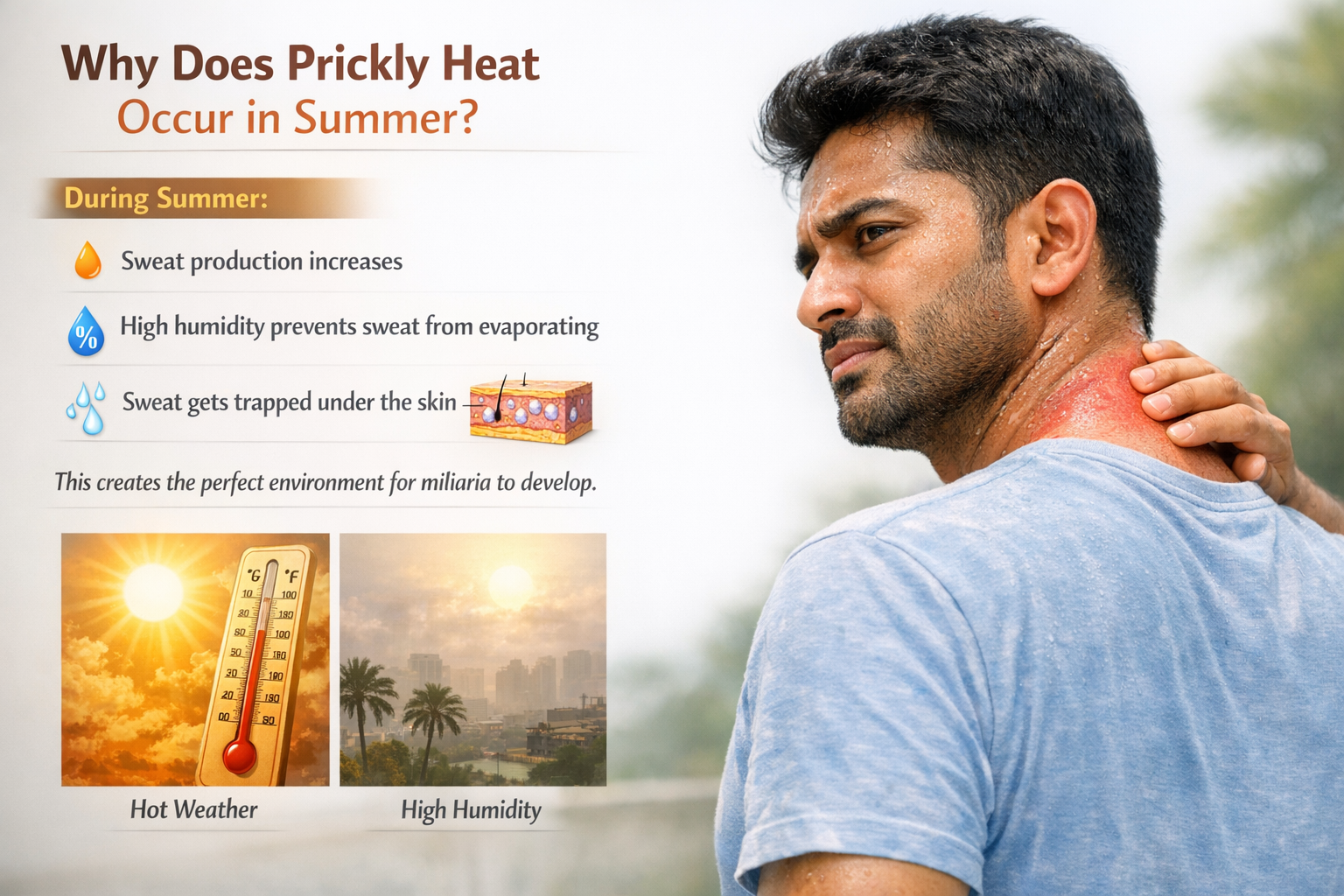
During summer:
- Sweat production increases
- High humidity prevents sweat from evaporating
- Sweat gets trapped under the skin
This creates the perfect environment for miliaria to develop.
Common Types of Miliaria
1. Miliaria Rubra (Most Common)
- Red bumps
- Itching and prickling sensation
- Common on neck, chest, back and skin folds
2. Miliaria Crystallina
- Clear, tiny fluid-filled bumps
- Minimal itching
3. Miliaria Profunda (Rare)
- Flesh-colored bumps
- Occurs with repeated episodes
Symptoms of Prickly Heat
You may notice:
- Small red or skin-colored bumps
- Itching or burning sensation
- Stinging feeling especially with sweating
- Mild swelling or irritation
In severe cases:
- Secondary infection
- Pus-filled lesions
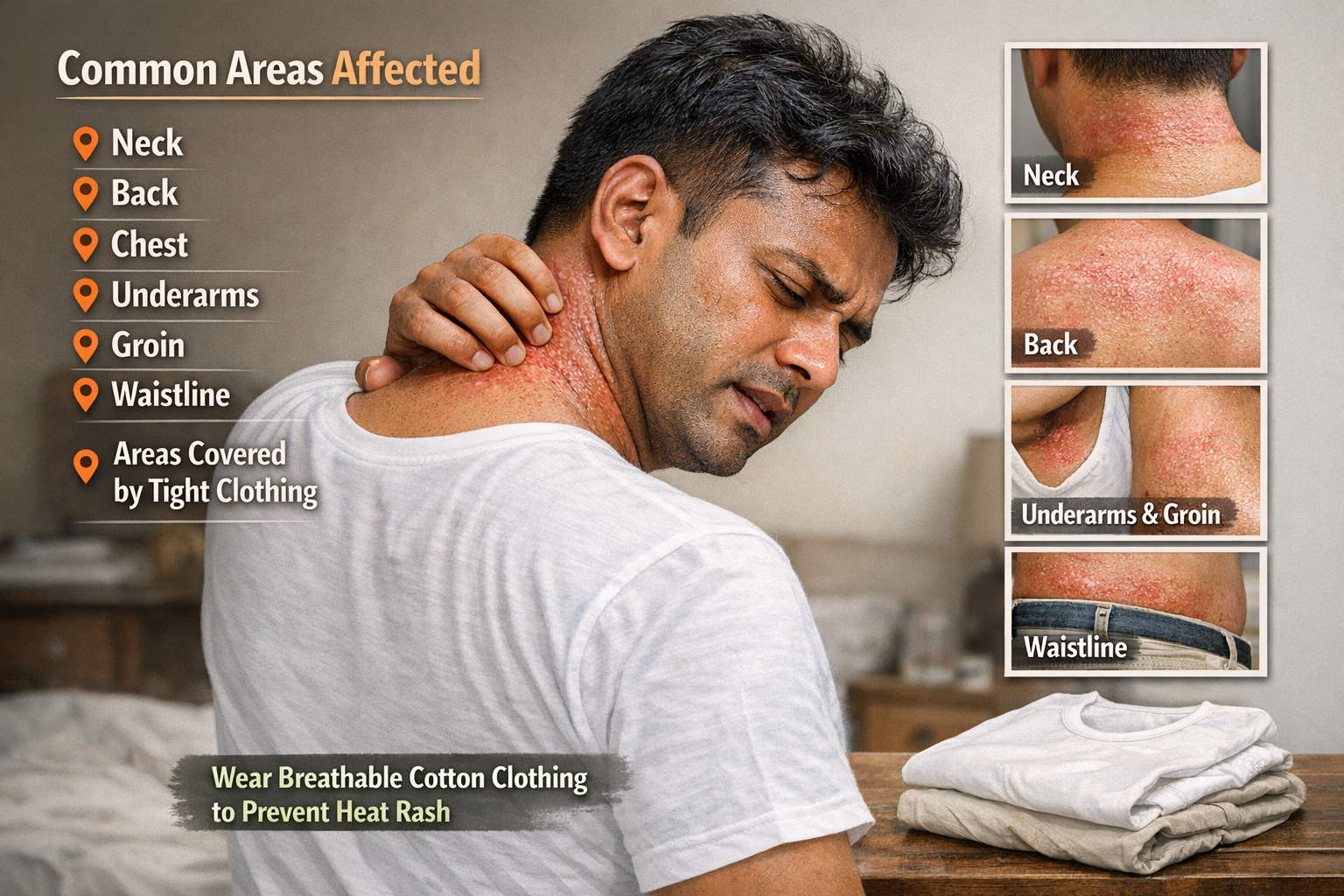
Common Areas Affected
- Neck
- Back
- Chest
- Underarms
- Groin
- Waistline
- Areas covered by tight clothing
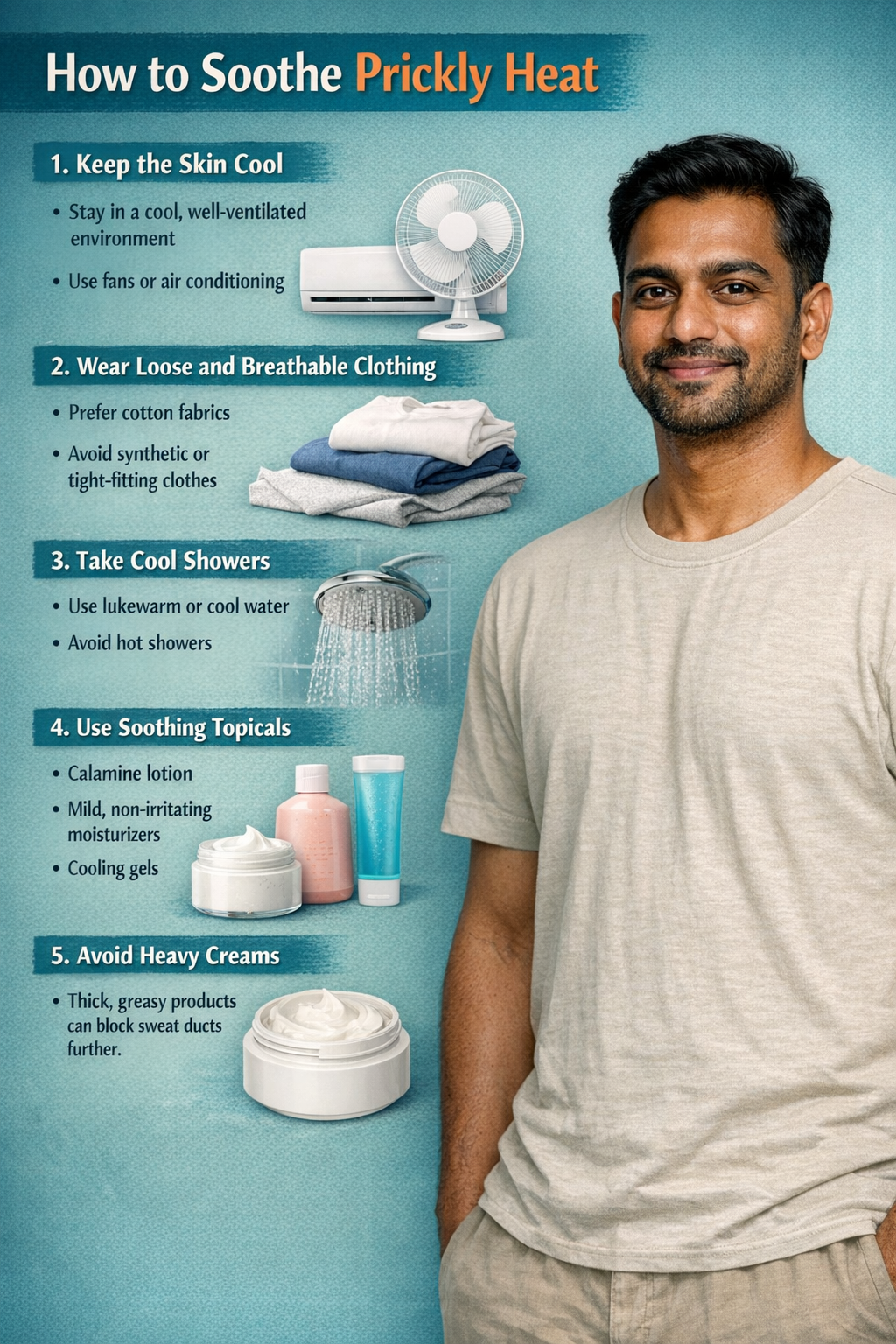
How to Soothe Prickly Heat
1. Keep the Skin Cool
- Stay in a cool, well-ventilated environment
- Use fans or air conditioning
2. Wear Loose and Breathable Clothing
- Prefer cotton fabrics
- Avoid synthetic or tight-fitting clothes
3. Take Cool Showers
- Use lukewarm or cool water
- Avoid hot showers
4. Use Soothing Topicals
- Calamine lotion
- Mild, non-irritating moisturizers
- Cooling gels
5. Avoid Heavy Creams
Thick, greasy products can block sweat ducts further.
✓ What Works Best
Keep affected areas dry, cool, and breathable. Simple cooling measures and avoiding sweat accumulation are often all that's needed.
What to Avoid
⌠Harmful Practices
These common remedies can worsen prickly heat and should be avoided:
- Scratching (can cause infection)
- Oily or occlusive creams
- Excessive sweating without cooling
- Harsh soaps or antiseptic washes
- Home remedies like lemon or baking soda
When to See a Dermatologist
Consult a dermatologist if:
- Rash persists beyond a few days
- There is severe itching or pain
- Pus or signs of infection appear
- Rash keeps recurring frequently
Medical treatment may include:
- Mild topical steroids
- Antihistamines for itching
- Antibiotics if secondary infection develops
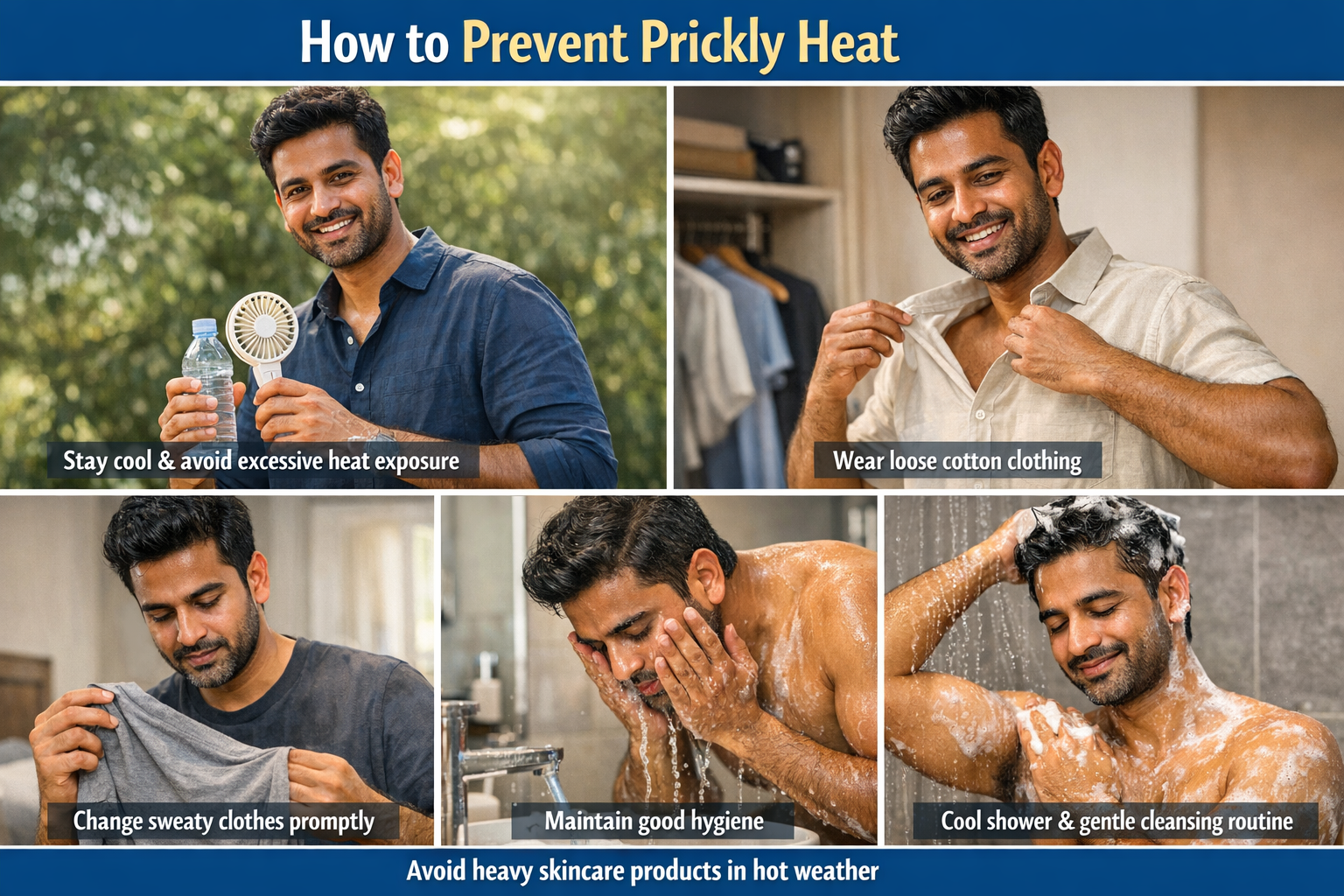
How to Prevent Prickly Heat
- Stay cool and avoid excessive heat exposure
- Wear loose cotton clothing
- Change sweaty clothes promptly
- Maintain good hygiene
- Avoid heavy skincare products in hot weather
Final Thoughts
Prickly heat is common during summer but it is easily manageable with simple measures like cooling the skin, avoiding occlusion and maintaining hygiene. Early care prevents discomfort and complications.
💡 Key Takeaway
Dealing with recurrent heat rash or skin irritation? A dermatological evaluation can help identify triggers and provide effective relief.