Introduction
Acrochordons, commonly known as skin tags, are benign pedunculated lesions composed of fibrovascular cores covered by epidermis. Though medically harmless, they are a frequent cause of cosmetic concern and sometimes discomfort due to friction. Their prevalence increases with age, obesity, insulin resistance, and metabolic syndrome.
Learn About Our Skin Rejuvenation Treatments
Radiofrequency (RF) ablation offers a rapid, precise, and minimally invasive modality for their removal, providing excellent cosmetic outcomes with minimal downtime.
Case Presentation
A 52-year-old male presented with multiple soft, pedunculated lesions over the neck and upper chest region, gradually increasing in number over several years. The patient reported:
- Cosmetic discomfort due to visible lesions
- Occasional snagging with collars and clothing
- Darkening of some lesions over time
- No history of bleeding, ulceration, or pain
On clinical examination, there were numerous brownish to hyperpigmented, sessile to pedunculated papules ranging from 1–5 mm in diameter, distributed predominantly over the anterolateral neck and upper presternal area.
Diagnostic Approach
Diagnosis was made clinically based on morphology and distribution. The classic presentation of soft, pedunculated, skin-colored to brown papules in friction-prone areas made the diagnosis straightforward.
Differential Diagnoses Considered
- Dermatosis papulosa nigra: Multiple small, pigmented papules, more common in darker skin types
- Seborrheic keratoses: Warty, "stuck-on" appearing lesions with variable pigmentation
- Filiform warts: Thread-like projections caused by HPV infection
No biopsy was deemed necessary as the presentation was classic for acrochordons. The patient's fasting blood glucose and HbA1c were within normal limits, ruling out metabolic syndrome associations.
Pathophysiology
Acrochordons are thought to result from epidermal hyperplasia secondary to several factors:
- Chronic friction: Repetitive mechanical trauma in intertriginous areas
- IGF-1 stimulation: Insulin-like growth factor-1 promotes epidermal cell proliferation
- Metabolic dysregulation: Association with insulin resistance and obesity
- Familial predisposition: Genetic factors may play a role
Histologically, they contain a fibrovascular core covered by unremarkable epidermis. There is often an association with obesity, insulin resistance, and familial predisposition.
Treatment Approach
After obtaining informed consent and ensuring the patient understood the procedure, we proceeded with radiofrequency ablation using the following protocol:
Treatment Protocol
- Anesthesia: Topical anesthesia with lignocaine-prilocaine cream applied under occlusion for 45 minutes
- RF Settings: Lesions removed using radiofrequency ablation in cut and coagulation mode
- Technique: Fine needle electrode used to maintain minimal lateral heat spread
- Precision: Care taken to prevent post-inflammatory pigmentation
Post-Procedure Care
- Topical mupirocin twice daily for 3 days to prevent infection
- Sun protection using broad-spectrum SPF 50+ sunscreen
- Gentle cleansing with mild soap and water
- Follow-up appointment at 7 days for wound assessment
The patient tolerated the procedure well, and there was complete clearance of lesions with excellent cosmetic outcomes. See the clinical examples below demonstrating the RF ablation technique:
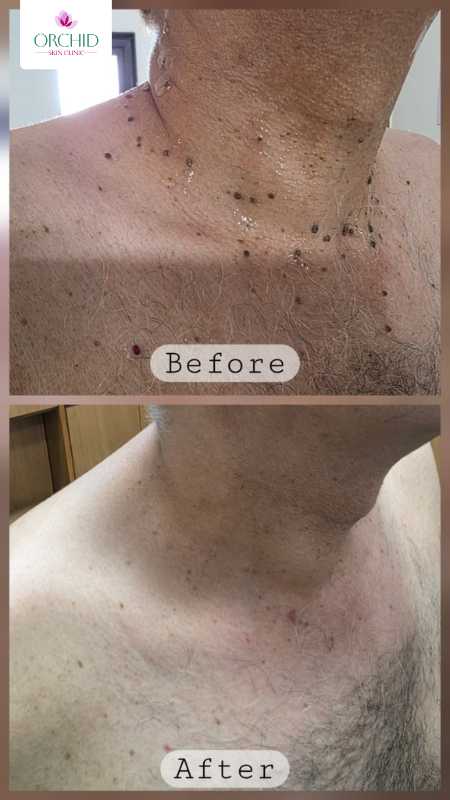
Figure 1: Treatment Sample
Clinical demonstration of RF ablation technique for multiple acrochordons on cervical region
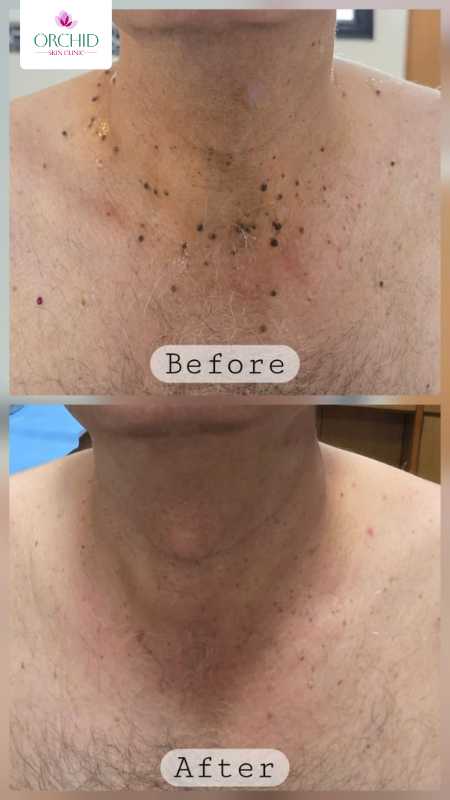
Figure 2: Treatment Sample
Successful RF ablation demonstrating excellent cosmetic outcomes with minimal scarring
Clinical Implications
Radiofrequency ablation remains a superior modality for acrochordon removal, offering multiple advantages over traditional methods:
Advantages of RF Ablation
- Precise lesion targeting: Allows selective treatment without affecting surrounding tissue
- Minimal bleeding: Immediate hemostasis through coagulation
- Short procedure time: Multiple lesions can be treated in one session
- Negligible recurrence: When lesion base is adequately coagulated
- Superior cosmetic results: Better outcomes compared to snip excision or cryotherapy
- Minimal downtime: Patients can resume normal activities immediately
It is especially suitable for multiple clustered lesions in aesthetic zones such as the neck and axillae, where cosmetic outcome is paramount.
Comparison with Other Treatment Modalities
While several treatment options exist for acrochordons, radiofrequency ablation offers distinct advantages:
- Snip excision: Risk of bleeding, requires suturing for larger lesions
- Cryotherapy: Longer healing time, risk of hypopigmentation, less precise
- Electrocautery: More lateral thermal damage, increased scarring risk
- Laser ablation: More expensive, similar results to RF ablation
- RF ablation: Optimal balance of precision, safety, cost, and cosmetic outcome
Patient Counseling and Metabolic Screening
Early removal of skin tags not only addresses cosmetic concerns but also provides an opportunity for screening of underlying metabolic associations. Patients presenting with multiple acrochordons should be evaluated for:
- Type 2 diabetes mellitus and prediabetes
- Insulin resistance and metabolic syndrome
- Obesity and body mass index assessment
- Dyslipidemia and cardiovascular risk factors
- Polycystic ovarian syndrome (PCOS) in women
Studies have shown a significant association between multiple skin tags and insulin resistance, making their presence a potential marker for metabolic dysfunction.
Conclusion
This case highlights the efficacy and cosmetic excellence of radiofrequency ablation for multiple acrochordons. With proper technique and post-procedure care, it ensures near-instant cosmetic improvement and high patient satisfaction.
Key takeaways include:
- RF ablation is safe, effective, and provides excellent cosmetic outcomes
- Minimal downtime allows patients to resume normal activities quickly
- Multiple lesions can be treated efficiently in a single session
- Post-procedure care is simple and well-tolerated
- Presence of multiple skin tags warrants metabolic screening
At our clinic, we specialize in advanced cosmetic dermatology procedures including radiofrequency ablation for various benign skin lesions. If you're concerned about skin tags or other cosmetic skin conditions, we encourage you to schedule a consultation for personalized evaluation and treatment.