Introduction
Tanning is one of the most common skin concerns during summer. Whether it's from daily sun exposure, travel or outdoor activities, many people notice their skin becoming darker, dull and uneven.
This leads to a flood of home remedies, DIY hacks and "quick-fix" treatments. But not everything that promises tan removal is safe or effective. Let's understand what actually works and what can damage your skin.
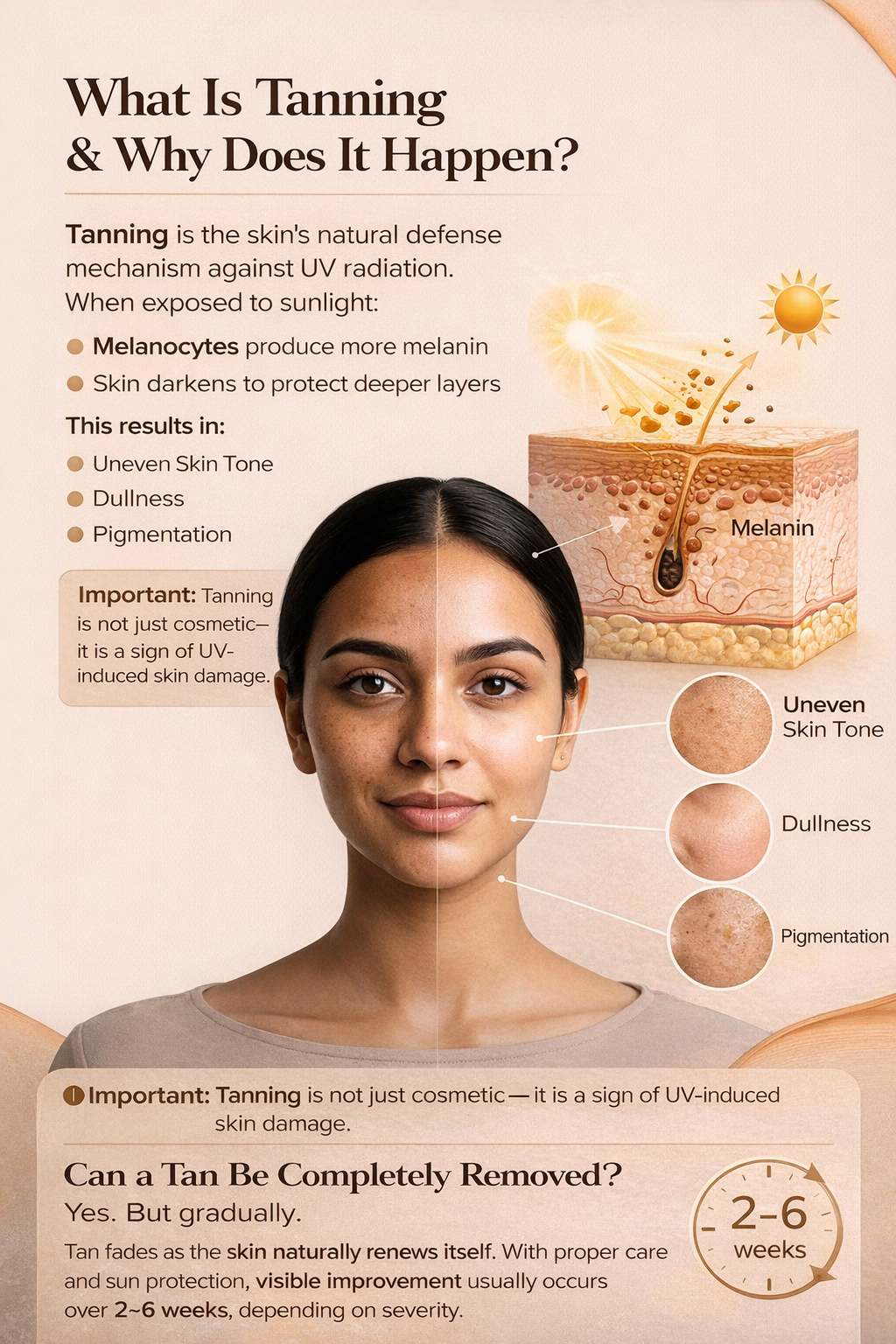
What Is Tanning and Why Does It Happen?
Tanning is the skin's natural defense mechanism against UV radiation. When exposed to sunlight:
- Melanocytes produce more melanin
- Skin darkens to protect deeper layers
This results in:
- Uneven skin tone
- Dullness
- Pigmentation
Important: Tanning is not just cosmetic—it is a sign of UV-induced skin damage.
Can a Tan Be Completely Removed?
Yes. But gradually.
Tan fades as the skin naturally renews itself. With proper care and sun protection, visible improvement usually occurs over 2–6 weeks, depending on severity.
âš ï¸ Important Note
Aggressive or instant "removal" methods often do more harm than good. Focus on safe, gradual solutions instead of pursuing quick fixes.
What Actually Works for Tan Removal
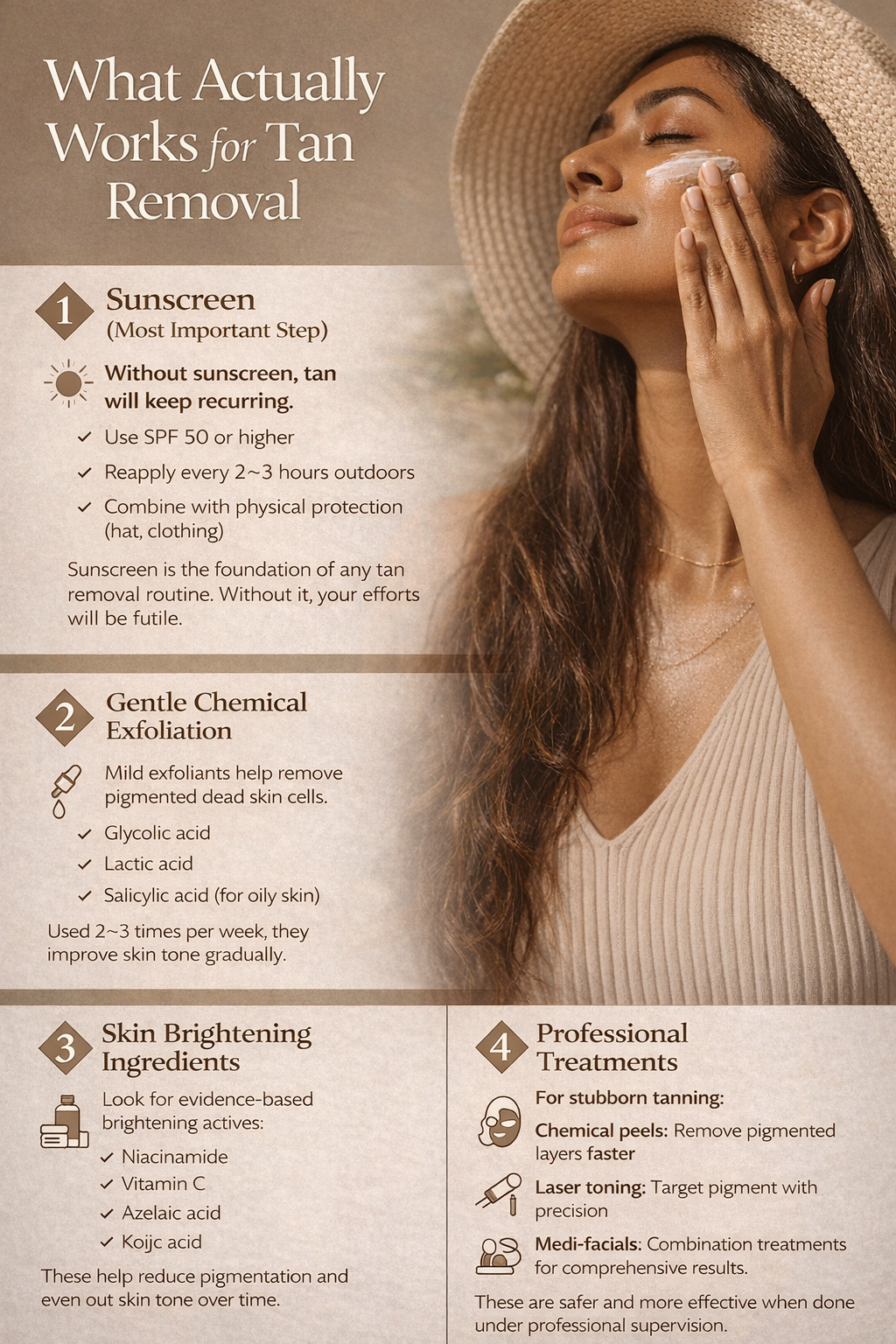
1. Sunscreen (Most Important Step)
Without sunscreen, tan will keep recurring.
- Use SPF 50 or higher
- Reapply every 2–3 hours outdoors
- Combine with physical protection (hat, clothing)
Sunscreen is the foundation of any tan removal routine. Without it, your efforts will be futile.
2. Gentle Chemical Exfoliation
Mild exfoliants help remove pigmented dead skin cells.
Examples:
- Glycolic acid
- Lactic acid
- Salicylic acid (for oily skin)
When used correctly, they improve skin tone gradually. Use 2–3 times per week for best results.
3. Skin Brightening Ingredients
Look for evidence-based brightening actives:
- Niacinamide
- Vitamin C
- Azelaic acid
- Kojic acid
These help reduce pigmentation and even out skin tone over time. Results typically appear after 4–8 weeks of consistent use.
4. Professional Treatments
For stubborn tanning:
- Chemical peels: Remove pigmented layers faster
- Laser toning: Target pigment with precision
- Medi-facials: Combination treatments for comprehensive results
These are safer and more effective when done under professional supervision.
What Damages Your Skin (Avoid These)
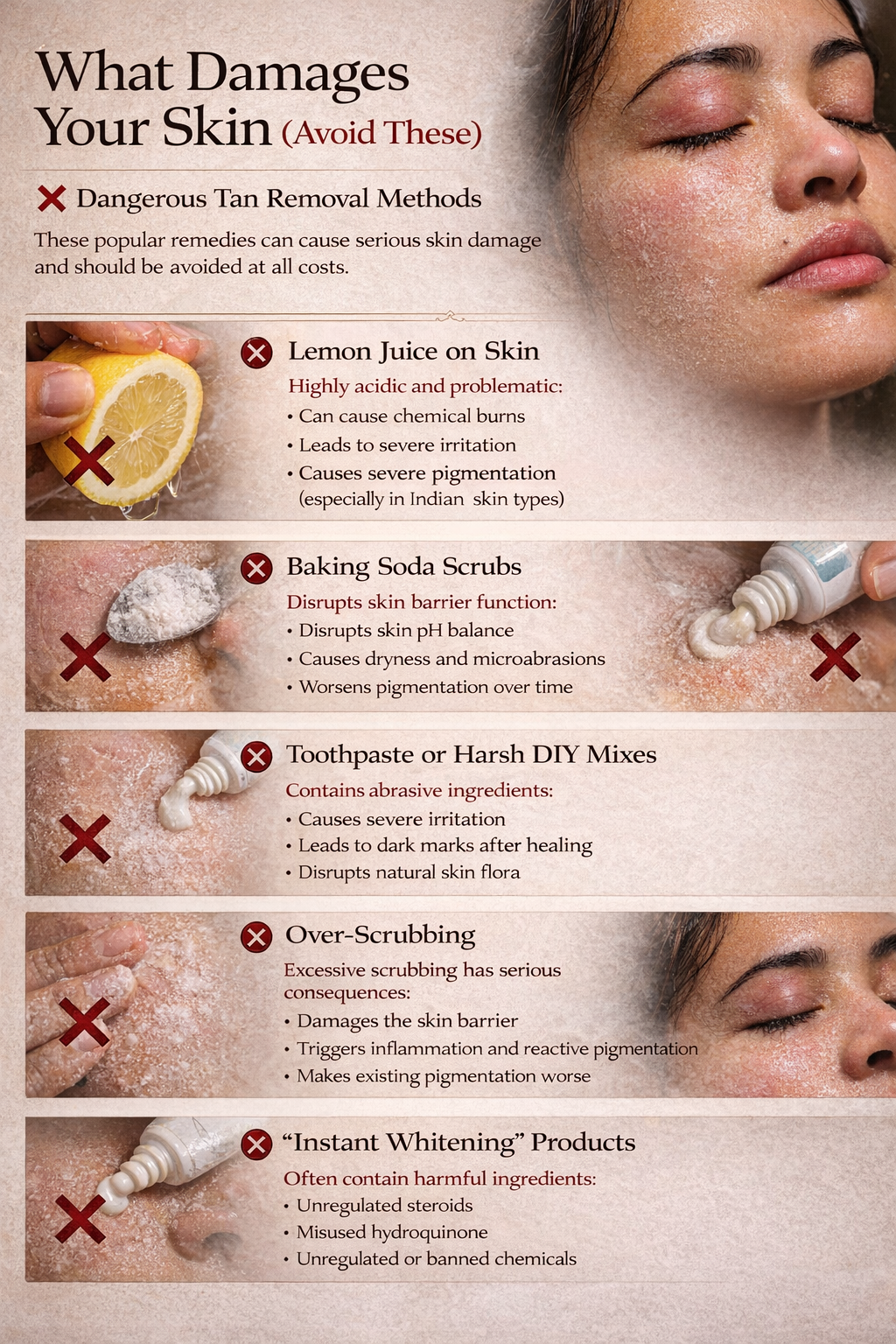
⌠Dangerous Tan Removal Methods
These popular remedies can cause serious skin damage and should be avoided at all costs.
1. Lemon Juice on Skin
Highly acidic and problematic:
- Can cause chemical burns
- Leads to severe irritation
- Causes severe pigmentation (especially in Indian skin types)
2. Baking Soda Scrubs
Disrupts skin barrier function:
- Disrupts skin pH balance
- Causes dryness and microabrasions
- Worsens pigmentation over time
3. Toothpaste or Harsh DIY Mixes
Contains abrasive ingredients:
- Causes severe irritation
- Leads to dark marks after healing
- Disrupts natural skin flora
4. Over-Scrubbing
Excessive scrubbing has serious consequences:
- Damages the skin barrier
- Triggers inflammation and reactive pigmentation
- Makes existing pigmentation worse
5. "Instant Whitening" Products
Often contain harmful ingredients:
- UnRegulated steroids (oxybenzone)
- Misused hydroquinone (can cause ochronosis)
- Unregulated or banned chemicals
These can cause long-term skin damage, especially with repeated use.
Common Tan Removal Mistakes
- Skipping sunscreen after treatment—negates all progress
- Using too many actives together—causes irritation and barrier damage
- Expecting overnight results—skin renewal takes time
- Following social media trends blindly—most DIY hacks are unsafe
- Not identifying underlying pigmentation issues—melasma requires different treatment
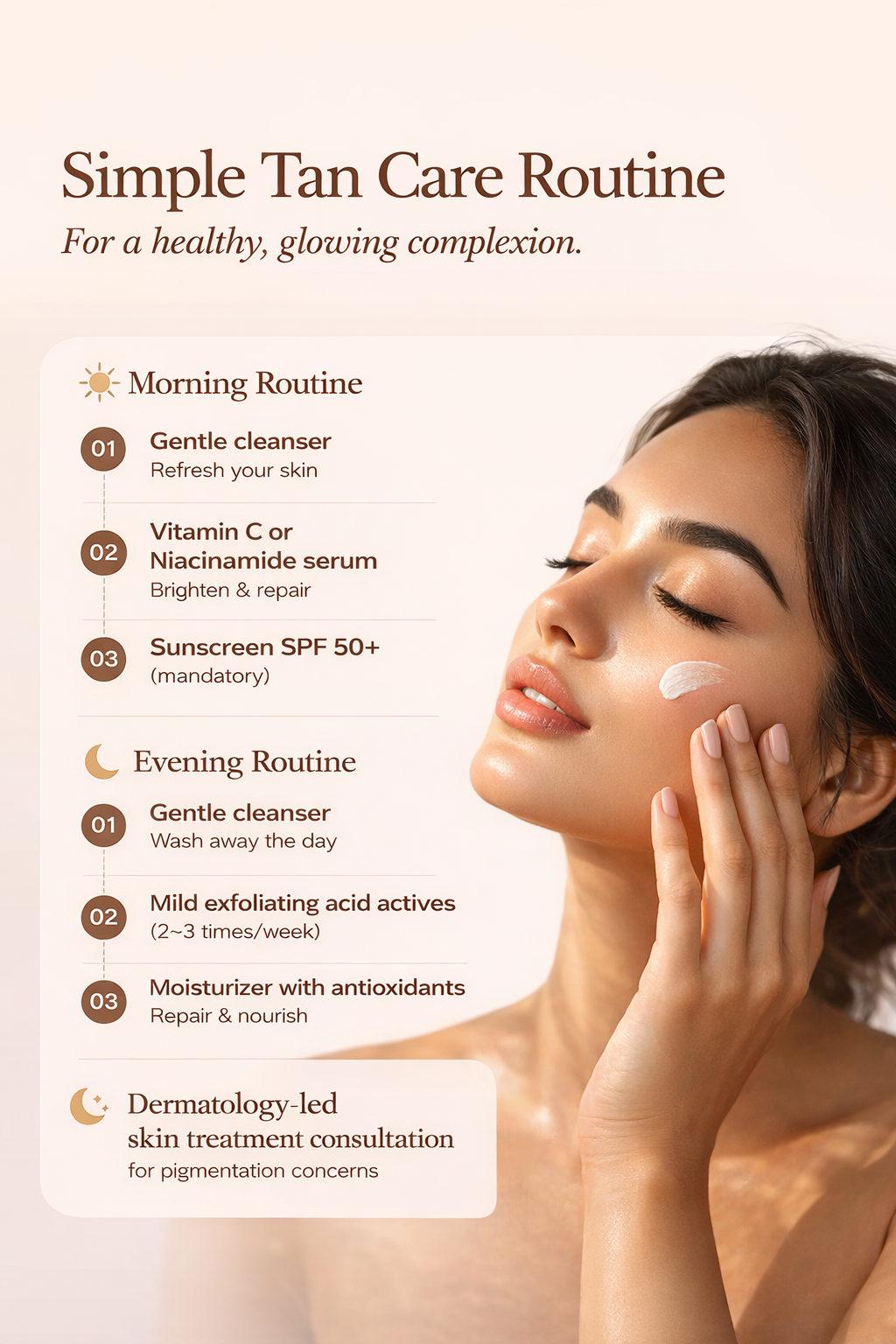
Simple Tan Care Routine
Morning Routine
- Gentle cleanser
- Vitamin C or Niacinamide serum
- Sunscreen SPF 50+ (mandatory)
Evening Routine
- Gentle cleanser
- Mild exfoliating acid actives (2–3 times/week)
- Moisturizer with antioxidants
When Should You See a Dermatologist?
Consult a dermatologist if:
- Tan does not improve in 4–6 weeks with proper care
- Pigmentation is patchy or uneven (suggests melasma)
- Skin becomes sensitive or irritated after home treatments
- You have chronic pigmentation or post-inflammatory hyperpigmentation
Professional Treatment Advantage
Professional treatment ensures safe and effective results, tailored to your specific skin type and pigmentation pattern. What works for one person may not work for another.
Final Thoughts
Tan removal is not about quick fixes—it's about protecting your skin, supporting natural renewal and avoiding damage.
The safest way to achieve clear and even-toned skin is through:
- Consistent sun protection
- Gentle, evidence-based skincare
- Professional treatments when needed
- Patience and realistic expectations