Introduction
Ingrown toenail, or onychocryptosis, is a common, painful condition in which the lateral edge of the nail plate penetrates the periungual skin, leading to inflammation, infection, and granulation tissue formation. It most often affects the great toe and may significantly impair mobility and quality of life.
Learn About Our Advanced Skin Treatments
While conservative measures suffice in early stages, chronic or recurrent cases often require surgical management. Total nail avulsion remains a simple and effective curative procedure in appropriately selected cases, providing immediate pain relief and excellent healing outcomes.
Case Presentation
A 28-year-old male presented with pain, redness, and swelling of the left great toe for the past 3 weeks. Clinical presentation included:
- Progressive pain that worsened significantly with walking or wearing closed footwear
- Visible redness and swelling around the lateral nail fold
- Mild seropurulent discharge from the affected area
- History of a similar episode one year earlier, treated conservatively with topical antibiotics and foot soaks
- No systemic symptoms or underlying comorbidities
On physical examination, there was clear ingrowth of the lateral edge of the nail plate into the periungual fold with associated erythema, tenderness, and mild seropurulent discharge. Based on these clinical findings, the diagnosis of Grade II onychocryptosis was established.
Diagnostic Approach
Diagnosis was purely clinical, supported by visual inspection and careful palpation. The presentation was classic for onychocryptosis with characteristic findings:
Differential Diagnoses Considered
- Acute paronychia: Infection of the nail fold without actual nail plate ingrowth
- Glomus tumor: Characterized by severe pain but lacks the inflammatory changes
- Subungual exostosis: Bony growth beneath the nail with characteristic bone tenderness
- Chronic paronychia: Persistent inflammation without acute pain episodes
These differentials were ruled out based on the absence of atypical pain patterns, palpable masses, or bone tenderness. No imaging studies or laboratory tests were required given the straightforward clinical presentation.
Pathophysiology
Onychocryptosis arises from abnormal curvature or excessive lateral pressure of the nail plate on the periungual skin. The pathophysiological process involves several contributing factors:
- Improper nail trimming: Cutting nails with curved edges rather than straight across
- Tight footwear: Excessive pressure causing nail plate deformation
- Toe trauma: Direct injury leading to abnormal nail growth patterns
- Genetic predisposition: Inherited tendency toward thickened nails or abnormal nail shape
- Biomechanical factors: Abnormal gait or foot structure
The repeated trauma leads to a foreign-body-like inflammatory response, secondary bacterial infection, and granulation tissue formation, perpetuating a cycle of pain, swelling, and further tissue damage.
Treatment Approach
After obtaining informed consent and explaining the procedure, including potential risks and benefits, we proceeded with total nail avulsion using the following standardized protocol:
Surgical Technique
- Anesthesia: Digital block administered using 2% lignocaine without adrenaline to ensure complete pain control
- Aseptic preparation: Thorough cleaning and draping of the operative field
- Nail separation: The entire nail plate was carefully separated from the nail bed using a periosteal elevator
- Complete removal: Nail plate removed in toto to prevent residual fragments
- Matrix preservation: Chemical matrix ablation was deferred to allow for potential nail regrowth and cosmetic restoration
- Hemostasis: Achieved with gentle pressure and proper wound care
Post-Operative Management
Comprehensive post-operative care was provided to optimize healing and prevent complications:
- Wound dressing: Exposed nail bed dressed with framycetin tulle and covered with sterile gauze
- Antibiotic therapy: Oral amoxicillin-clavulanate (625 mg twice daily for 5 days) to prevent infection
- Pain management: NSAIDs prescribed for effective pain relief
- Wound care: Warm saline soaks initiated from day 3 onward to promote healing
- Topical care: Antibiotic cream with daily dressing changes
- Activity modification: Advice on proper footwear and activity restrictions during healing
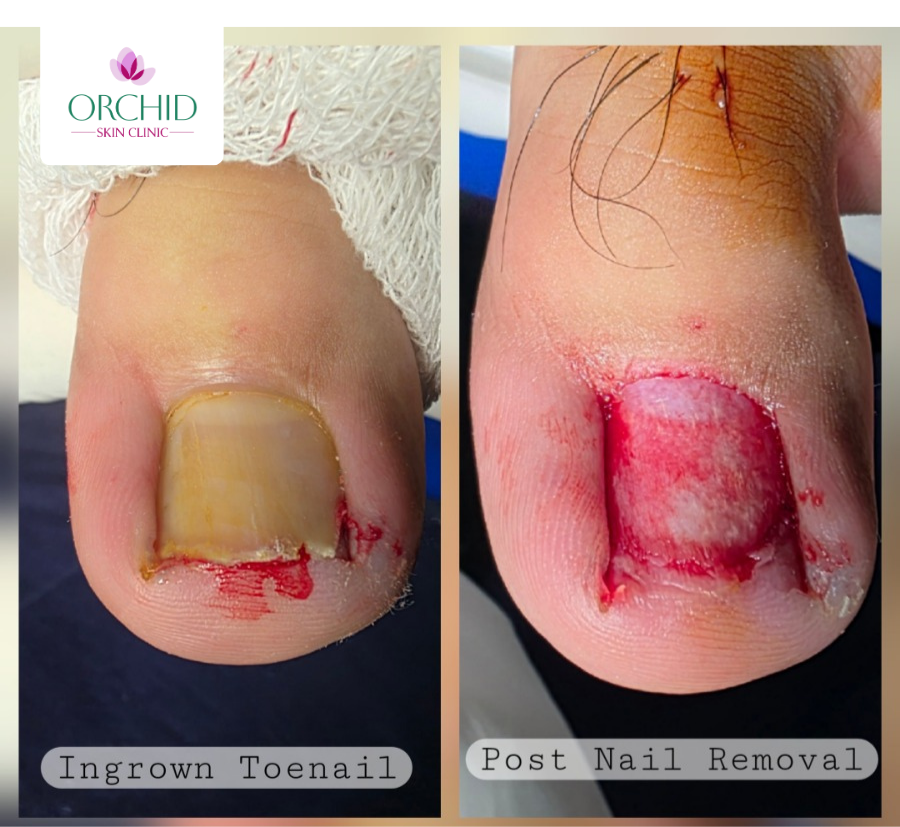
Figure 1: Before
Clinical sequence showing pre-procedure onychocryptosis with characteristic ingrowth and inflammation
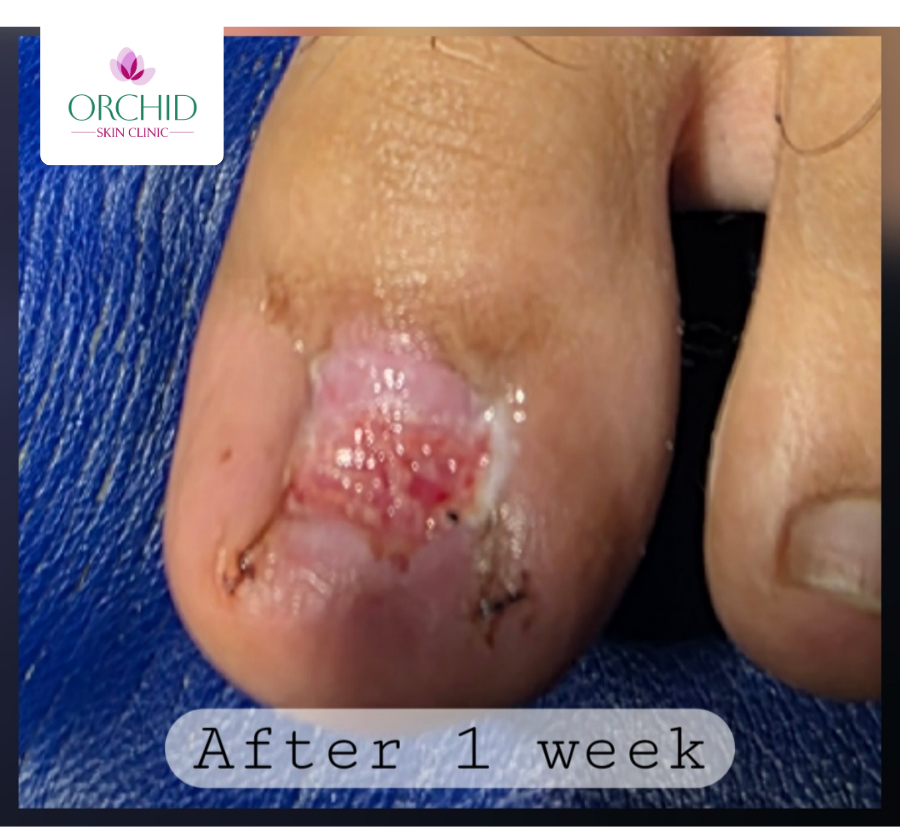
Figure 2: After
Post-avulsion healing at 1-week follow-up demonstrating healthy granulation tissue and progressive epithelialization
Clinical Outcomes and Follow-up
At 1-week follow-up, the patient demonstrated excellent clinical progress with the following findings:
Excellent Healing Response
- Healthy granulation tissue: Pink, well-vascularized tissue indicating proper healing
- No discharge or infection: Complete resolution of purulent drainage
- Minimal tenderness: Significant pain reduction allowing normal activities
- Progressive epithelialization: Edge healing progressing as expected
- Patient satisfaction: High satisfaction with immediate pain relief and healing progress
The surgical site showed optimal healing characteristics with no signs of infection or complications. The patient was able to resume normal footwear and activities within one week.
Clinical Implications
Total nail avulsion provides immediate relief from pain and inflammation in chronic ingrown toenails, offering several distinct advantages:
Advantages of Total Nail Avulsion
- Immediate pain relief: Complete removal eliminates the source of pressure and inflammation
- Simple technique: Straightforward procedure with predictable outcomes
- Office-based procedure: Can be performed in clinic settings with local anesthesia
- Cost-effective: Lower cost compared to more complex surgical procedures
- Excellent healing: Rapid wound healing with proper post-operative care
- Cosmetic preservation: Allows for natural nail regrowth when matrix is preserved
Comparison with Alternative Treatments
While partial nail avulsion with phenolization is typically the gold standard for recurrent cases, complete removal remains highly effective:
- Conservative treatment: Limited efficacy in chronic or severe cases
- Partial nail avulsion: Higher recurrence rate if lateral matrix remains active
- Phenol application: Risk of chemical burns and delayed healing
- Total nail avulsion: Excellent for cases with extensive nail plate involvement or infection
Patient Education and Prevention
Proper patient counseling is essential for preventing recurrence and ensuring optimal outcomes:
Essential Patient Education
- Nail regrowth timeline: Complete nail regrowth typically takes 4-6 months
- Proper nail trimming: Cut nails straight across, not curved at the edges
- Appropriate footwear: Well-fitting shoes that don't compress the toes
- Foot hygiene: Regular cleaning and drying to prevent infection
- Early intervention: Seek treatment promptly if symptoms recur
- Follow-up care: Regular monitoring during nail regrowth period
Risk Factors and Recurrence Prevention
Understanding and modifying risk factors is crucial for long-term success:
- Educate patients on proper nail cutting techniques
- Recommend appropriate footwear with adequate toe room
- Identify and modify biomechanical factors
- Provide guidance on foot care and hygiene
- Schedule regular follow-up visits during regrowth
Key Clinical Takeaways
This case demonstrates several important clinical principles for managing chronic onychocryptosis:
- Precise technique: Careful avulsion minimizes trauma to surrounding nail folds and tissues
- Infection prevention: Proper aseptic technique and antibiotic prophylaxis prevent post-operative complications
- Early follow-up: One-week assessment ensures optimal healing trajectory and patient comfort
- Patient education: Comprehensive counseling prevents recurrence and promotes long-term success
- Individualized approach: Treatment selection based on severity, patient factors, and recurrence history
Conclusion
This case highlights the efficacy and safety of total nail avulsion for chronic ingrown toenails when conservative management fails. With proper surgical technique, comprehensive post-operative care, and thorough patient education, excellent outcomes can be achieved with high patient satisfaction and minimal complications.
Key points for clinical practice:
- Total nail avulsion is safe, effective, and provides immediate pain relief
- Proper surgical technique and post-operative care are essential for success
- Patient education significantly reduces recurrence rates
- Early intervention prevents progression to more severe grades
- Regular follow-up ensures optimal healing and patient satisfaction
At our dermatology clinic, we specialize in comprehensive nail disorders management, including both conservative and surgical approaches. Our experience with various nail conditions ensures that patients receive the most appropriate treatment for their specific situation.