Winter can be harsh on the skin. Cold air, low humidity, hot showers, and indoor heating strips the skin of its natural moisture, leading to dryness, irritation, and flare-ups of existing skin conditions. Many people notice that their skin feels tighter, duller, and more sensitive during winter—even if they had no issues in summer.
With the right winter skin care routine, most of these problems can be prevented.
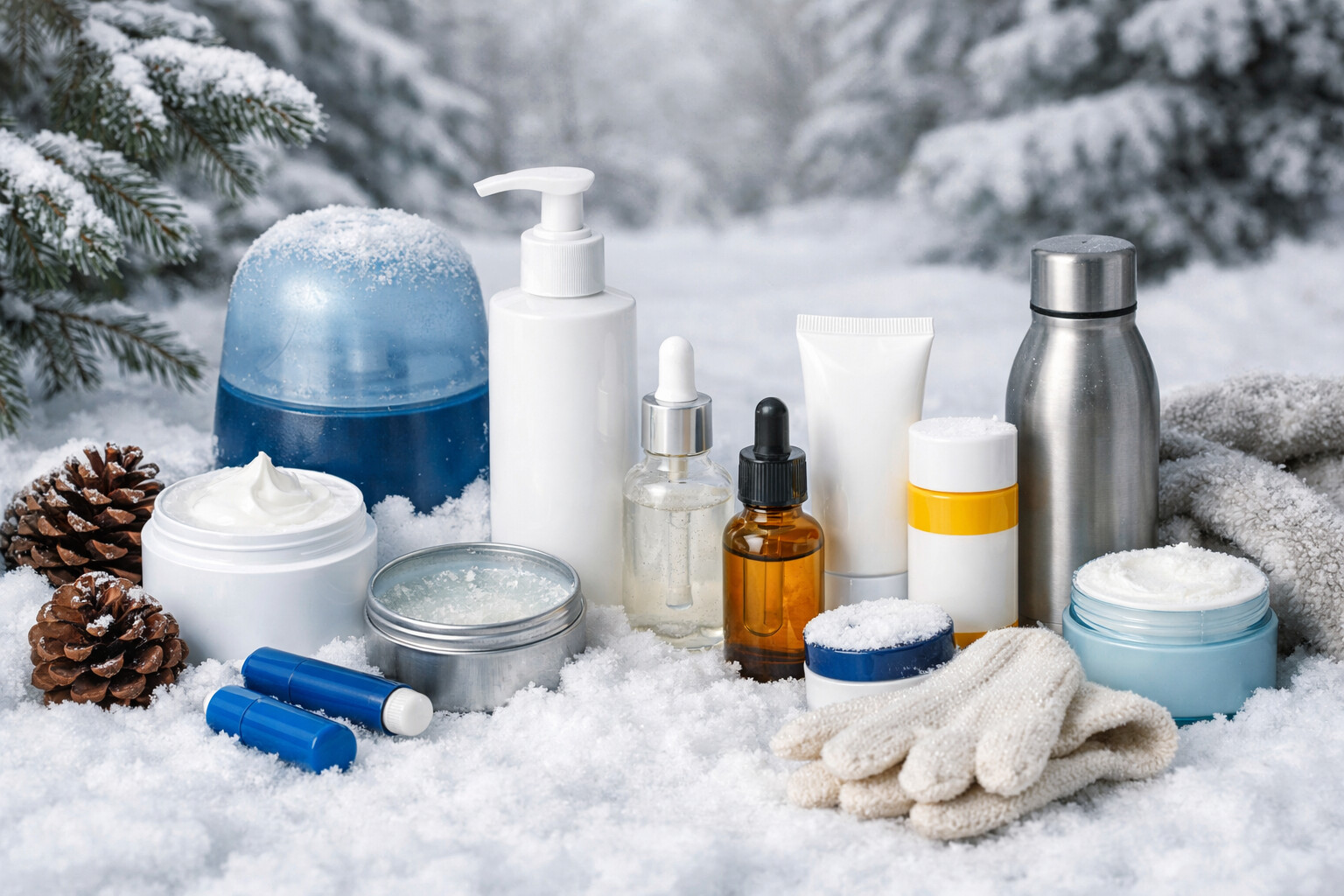
Why Does Skin Become Dry and Irritated in Winter?
During winter:
- Humidity levels drop, reducing moisture in the air
- Cold winds damage the skin barrier
- Hot water washes remove natural oils
- Indoor heating further dries the skin
Together, these factors weaken the skin's protective barrier, allowing water to escape and irritants to penetrate more easily.
Important to Know
Your skin's barrier function is crucial for maintaining hydration and protecting against environmental damage. Winter conditions directly compromise this barrier, making proper care essential.
Common Winter Skin Problems

1. Dry Skin (Xerosis)
The most common winter complaint, presenting as roughness, flaking, itching, and tightness.
2. Eczema Flare-Ups
People with eczema often experience worsening itching, redness, and cracks during winter.
3. Chapped Lips
Lips lack oil glands and dry out quickly in cold weather.
4. Dull and Rough Skin
Reduced cell turnover and dehydration can make the skin look tired and uneven.
5. Worsening Acne
Contrary to popular belief, acne can worsen in winter due to over-washing, heavy creams, and barrier damage.
Winter Skin Care Do's
- Use a gentle, non-foaming cleanser to avoid stripping natural oils
- Moisturize immediately after bathing to lock in moisture
- Switch to a thicker moisturizer containing ceramides, glycerin, or hyaluronic acid
- Apply sunscreen daily, even in winter
- Drink adequate water, as dehydration affects skin from within
- Use lukewarm water instead of hot water for bathing
Pro Tip
Consistency is more important than using multiple products. Stick to a simple, effective routine and give it time to work.
Winter Skin Care Don'ts
- Don't take long, hot showers
- Don't over-exfoliate dry or irritated skin
- Don't skip moisturizer because your skin "feels oily"
- Don't use harsh soaps or antiseptic washes on the face
- Don't ignore early signs of eczema or cracking
Over-cleansing and aggressive scrubbing worsen winter skin damage.
A Simple Winter Skin Care Routine
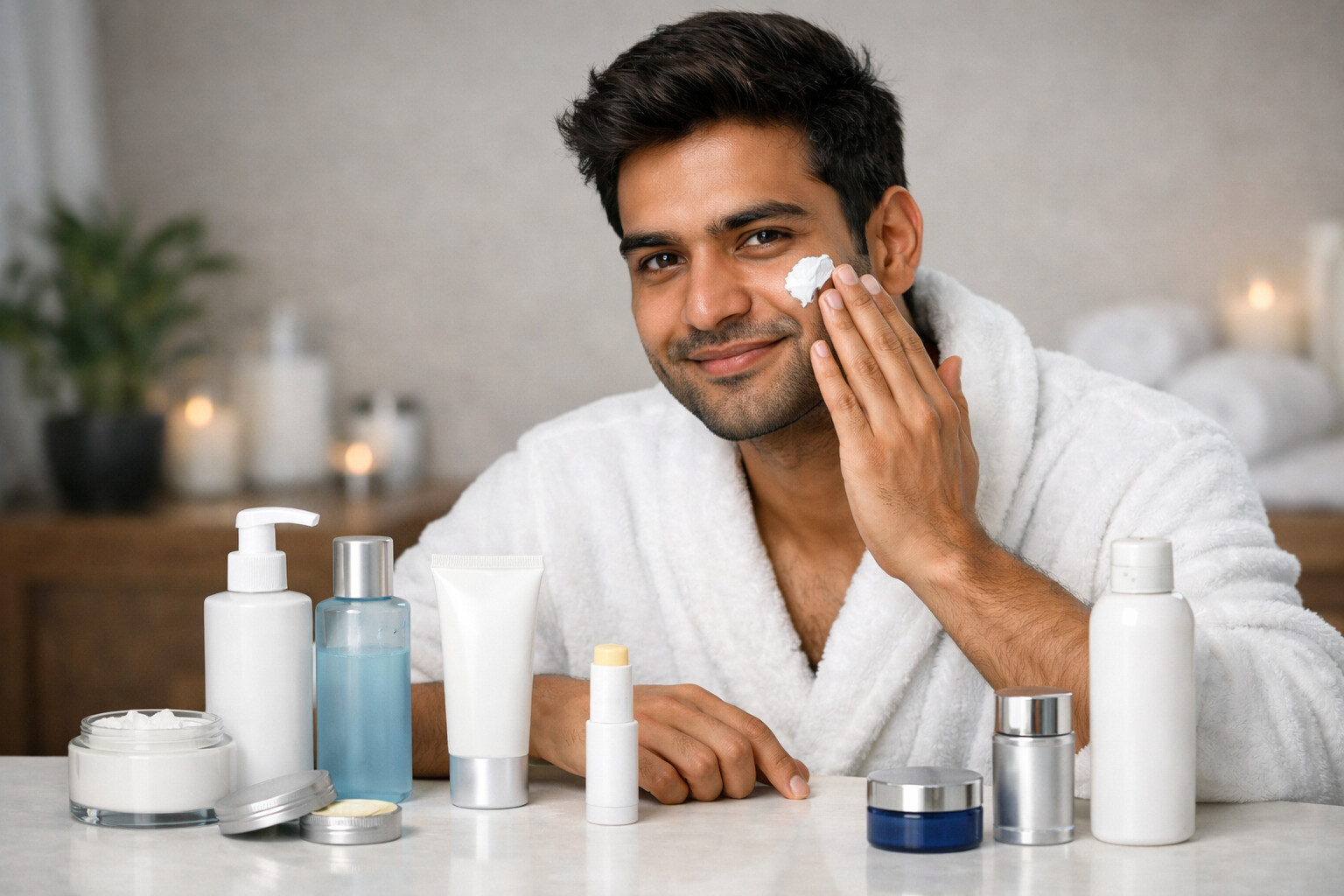
Morning
- Gentle cleanser
- Moisturizer suitable for winter
- Sunscreen (SPF 30 or higher)
Evening
- Mild cleanser
- Moisturizer (slightly thicker than daytime)
For acne-prone skin, moisturizers should be non-comedogenic and barrier-repair focused.
Special Winter Care for Different Areas
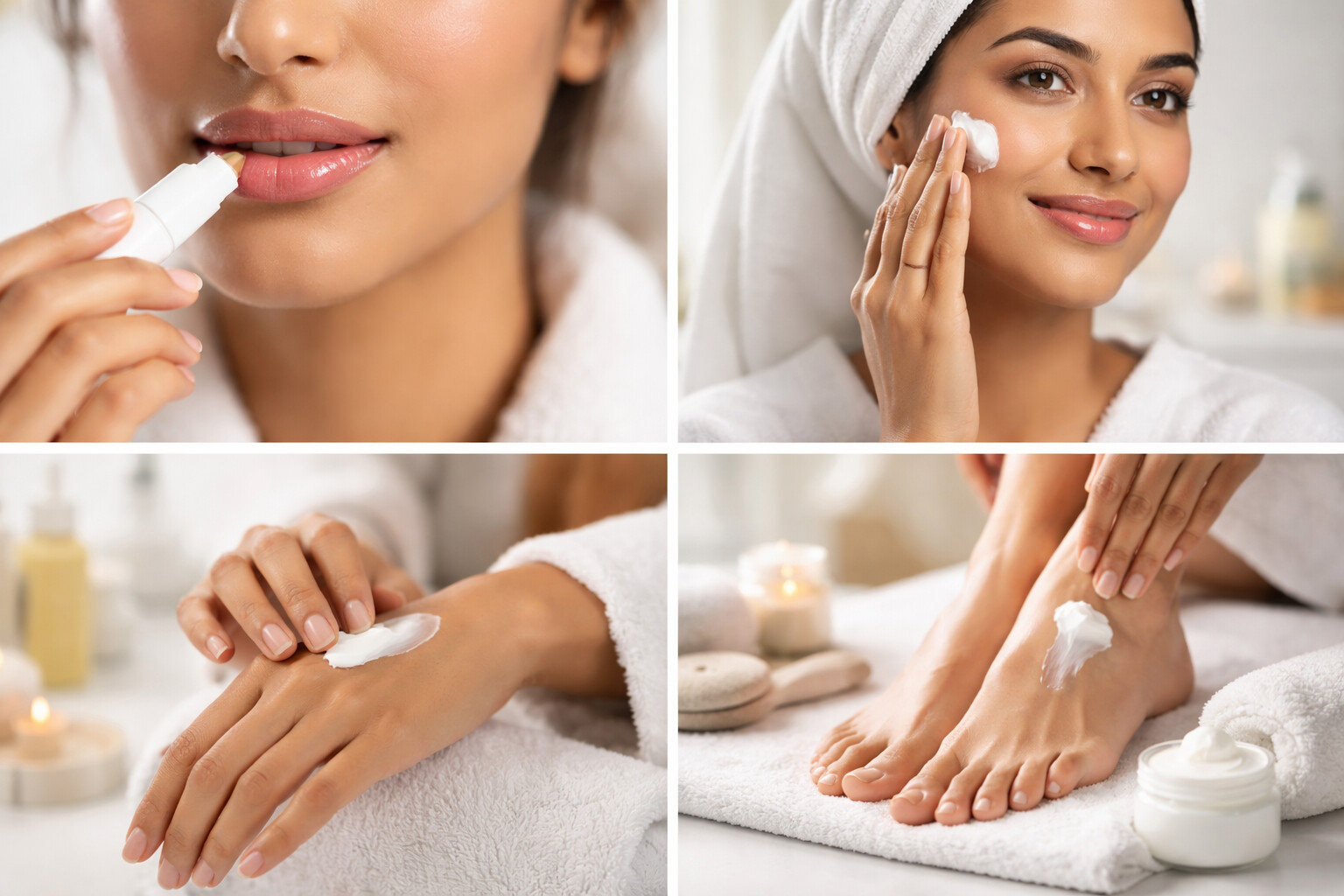
Face
Use fragrance-free moisturizers and avoid frequent face washing.
Lips
Apply lip balm frequently; avoid licking lips which worsens dryness.
Hands
Use hand cream after every wash; wear gloves in cold weather.
Feet
Apply thick moisturizer at night and wear cotton socks.
Special Populations
Children and older adults have a weaker skin barrier and need extra moisturization, mild cleansers, and shorter bathing times. Dry skin and itching should not be ignored in these age groups.
When Should You See a Dermatologist?
Consult a dermatologist if you notice:
- Persistent itching or redness
- Cracks, oozing, or bleeding skin
- Eczema not improving with moisturizers
- Sudden rashes or infections
- Acne worsening despite home care
Early treatment prevents complications and long-term skin damage.
Final Thoughts
Winter skin problems are common—but not inevitable. Most issues can be prevented with gentle cleansing, regular moisturization, and simple habit changes. Avoid experimenting with harsh home remedies and seek professional advice if symptoms persist.
Healthy winter skin is about protecting your skin barrier, not overloading it.
Struggling With Dry, Itchy or Sensitive Skin This Winter?
A personalized skin care plan can make all the difference.
Schedule Your ConsultationWhy does my skin get so dry in winter?
Winter air has low humidity, cold winds damage your skin barrier, hot showers strip natural oils, and indoor heating reduces moisture. These factors combined weaken your skin's ability to retain water.
Should I still use sunscreen in winter?
Yes, absolutely. UV rays are present year-round and can damage skin even on cloudy winter days. Use SPF 30 or higher daily for protection.
How often should I moisturize in winter?
Apply moisturizer at least twice daily—morning and evening. For very dry skin or exposed areas like hands, moisturize more frequently, especially after washing.
Can hot showers cause skin problems in winter?
Yes, hot water removes natural oils from your skin, leading to dryness and irritation. Use lukewarm water and keep showers short to protect your skin barrier.
When should I see a dermatologist for winter skin issues?
Consult a dermatologist if you have persistent itching or redness, cracked or bleeding skin, eczema not improving with moisturizers, sudden rashes or infections, or worsening acne despite proper care.