If your skin suddenly feels dry, irritated, sensitive, or starts breaking out despite using "good" products, the real issue could be a damaged skin barrier.
Skin barrier repair is a popular term, but many people do not fully understand what it means. Here is a clear, practical guide.
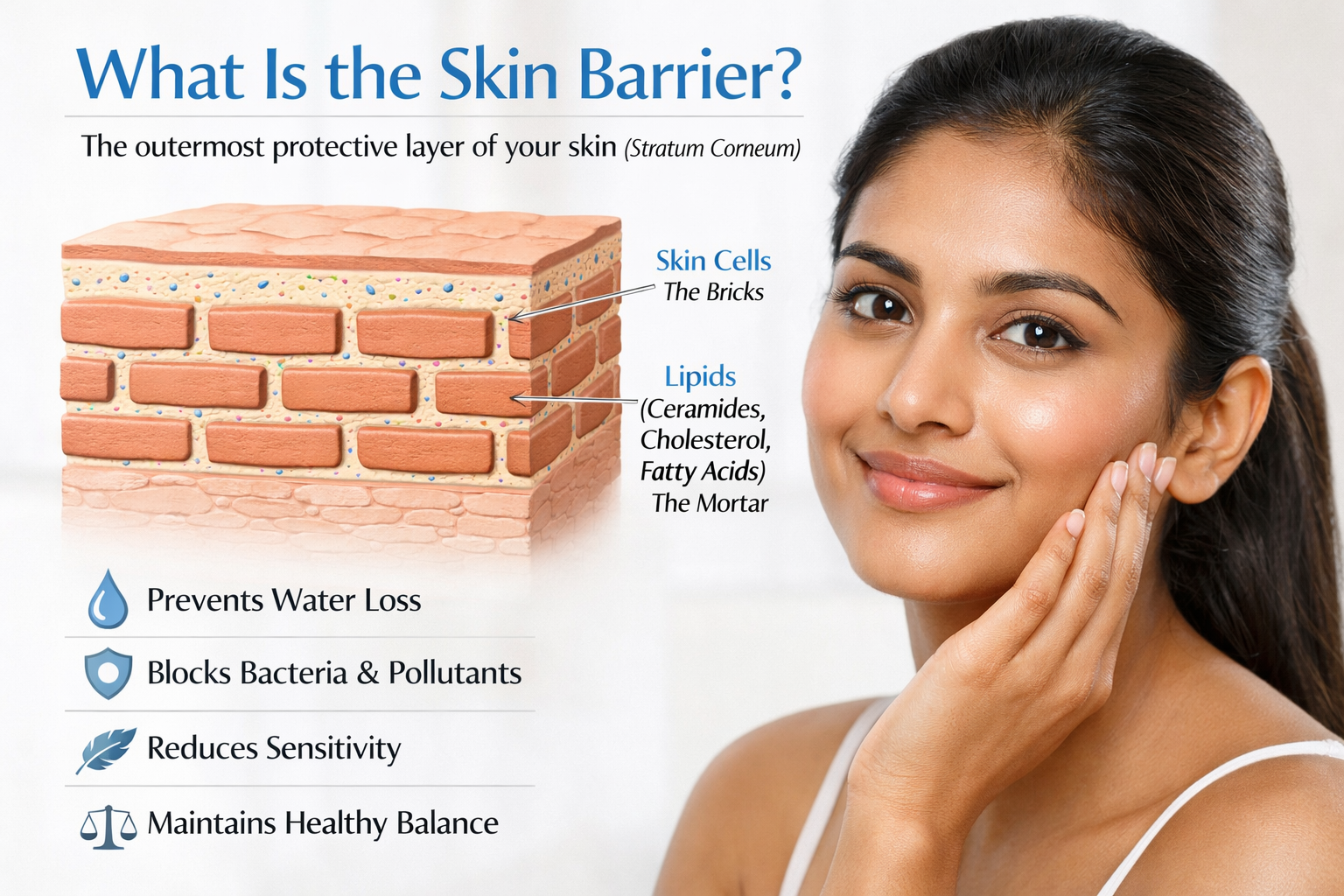
What Is the Skin Barrier?
The skin barrier is the outermost protective layer of your skin (stratum corneum). Think of it like a brick wall:
- Skin cells are the bricks
- Natural lipids (ceramides, cholesterol, fatty acids) are the cement
This barrier prevents water loss, protects against pollution and bacteria, reduces sensitivity, and maintains healthy balance.
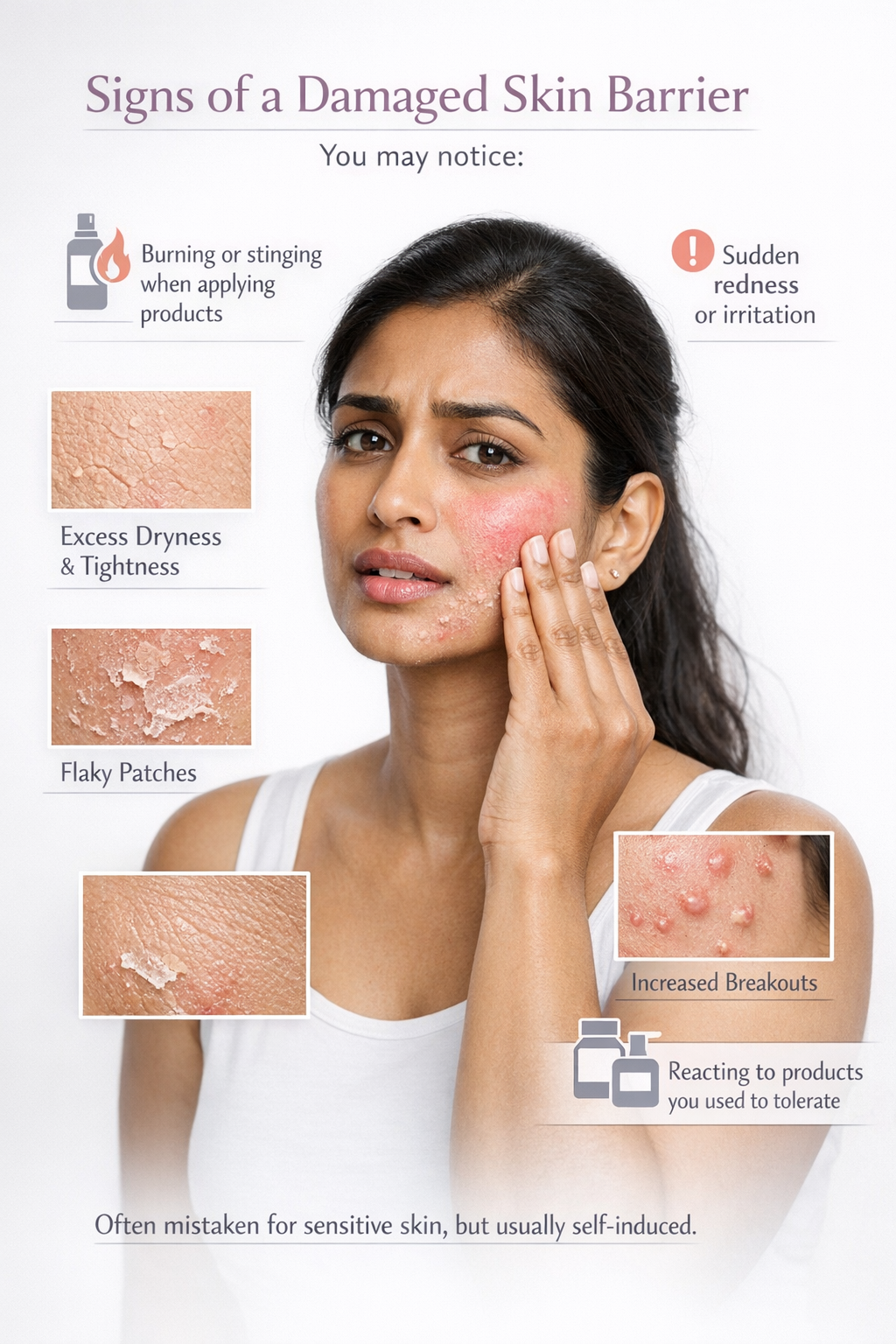
Signs of a Damaged Skin Barrier
You may notice:
- Burning or stinging when applying products
- Sudden redness or irritation
- Excess dryness or tightness
- Flaky patches
- Increased breakouts
- Skin reacting to products you previously tolerated
Many people mistake barrier damage for sensitive skin, when it is often self induced.
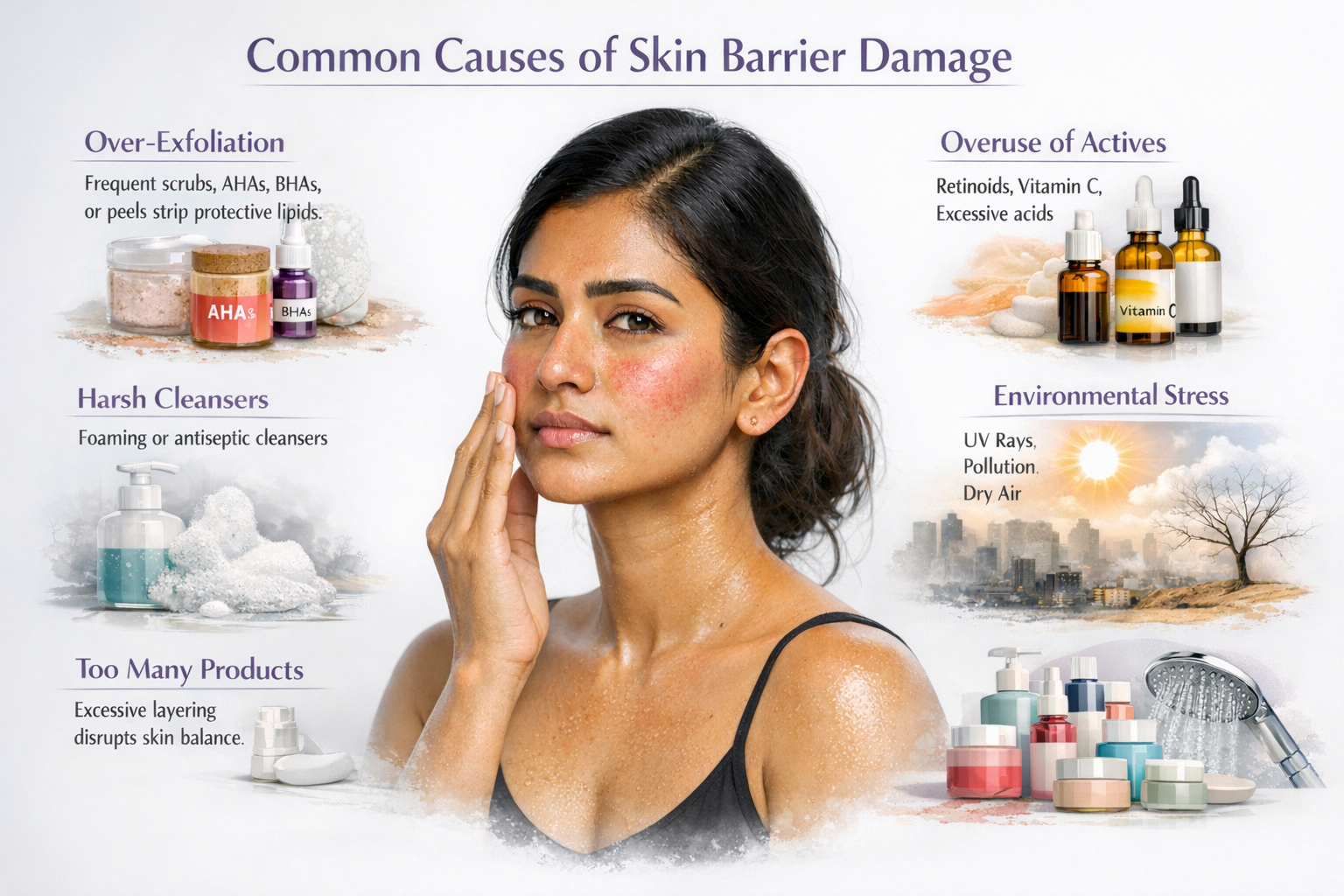
Common Causes of Skin Barrier Damage
- Over exfoliation: Frequent scrubs, AHAs, BHAs, or peels strip protective lipids.
- Overuse of actives: Retinoids, vitamin C, and acids are helpful but excessive use weakens the barrier.
- Harsh cleansers: Foaming or antiseptic cleansers remove natural oils.
- Hot showers: Heat increases transepidermal water loss.
- Environmental stress: Pollution, UV exposure, and dry winter air contribute to breakdown.
- Too many products: Excessive layering disrupts skin balance.
Why Barrier Damage Worsens Acne and Pigmentation
When the barrier is weak, inflammation rises, sebum becomes unstable, breakouts increase, and pigmentation worsens due to chronic irritation.
Sometimes aggressive acne treatment prolongs acne because the barrier never gets time to heal.
Important
If your skin burns with most products, simplify your routine and focus on repair before adding new actives.
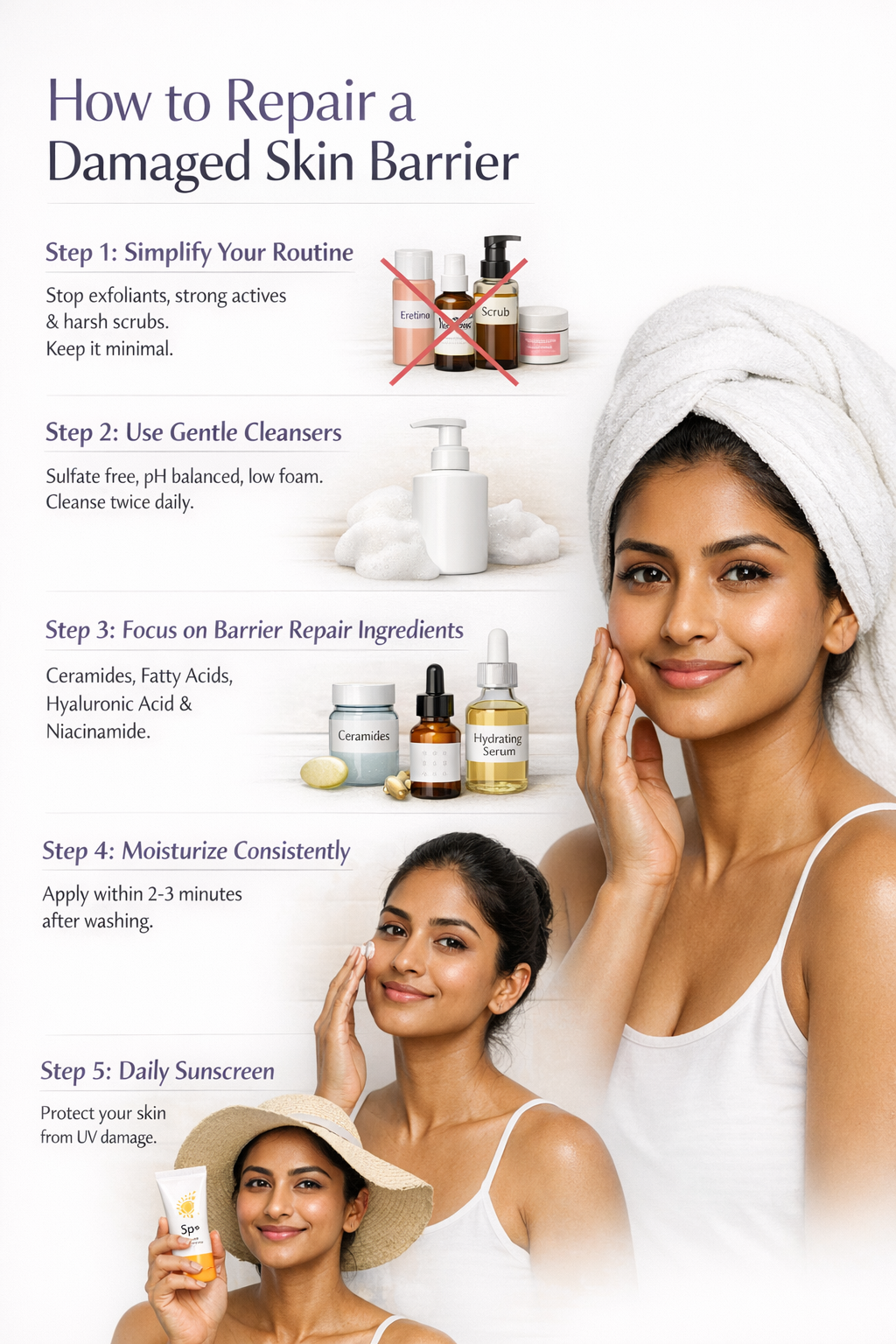
How to Repair a Damaged Skin Barrier
Step 1: Simplify Your Routine
Temporarily stop exfoliants, strong actives, and harsh scrubs. Keep it minimal.
Step 2: Use Gentle Cleansers
Choose sulfate free, low foam, pH balanced formulas. Cleanse twice daily only.
Step 3: Focus on Barrier Repair Ingredients
Look for ceramides, cholesterol, fatty acids, pentavitin, glycerin, hyaluronic acid, and moderate strength niacinamide.
Step 4: Moisturize Consistently
Moisturizer is not optional during repair. Apply within 2 to 3 minutes after washing.
Step 5: Daily Sunscreen
UV exposure delays healing and worsens inflammation. Daily protection matters.
How Long Does Barrier Repair Take?
- Mild damage may improve in 1 to 2 weeks
- Moderate damage may take 3 to 6 weeks
- Severe cases need professional guidance
Patience is key. Consistency matters.
Common Myths About Skin Barrier Repair
- "Oily skin does not need moisturizer" - oily skin can still be barrier damaged.
- "More actives mean faster results" - more irritation usually means slower recovery.
- "If it tingles, it is working" - persistent burning is a warning sign.
When Should You See a Dermatologist?
Consult a dermatologist if:
- Burning persists beyond a few days
- Acne worsens after starting treatment
- Redness and peeling are severe
- You are unsure which products to stop
Professional evaluation prevents long term skin damage.
Final Thoughts
Healthy skin is not about using the strongest products but about maintaining balance. Many chronic skin problems improve dramatically once the barrier is restored.
If your skin feels constantly irritated despite trying multiple products, the solution may be simplifying and repairing.
Concerned About Barrier Damage?
A personalized skincare plan can help restore balance safely and effectively.
Schedule Your ConsultationHow do I know if my skin barrier is damaged?
Common signs include burning or stinging with products, sudden redness, dryness, flaking, and increased breakouts.
Should I stop all actives during repair?
Yes. A short break from exfoliants and strong actives helps the barrier rebuild. Reintroduce slowly.
Can a damaged barrier cause acne?
Yes. A weak barrier increases inflammation and can make acne harder to control.
Which ingredients help the most?
Ceramides, cholesterol, fatty acids, glycerin, and hyaluronic acid support barrier repair.