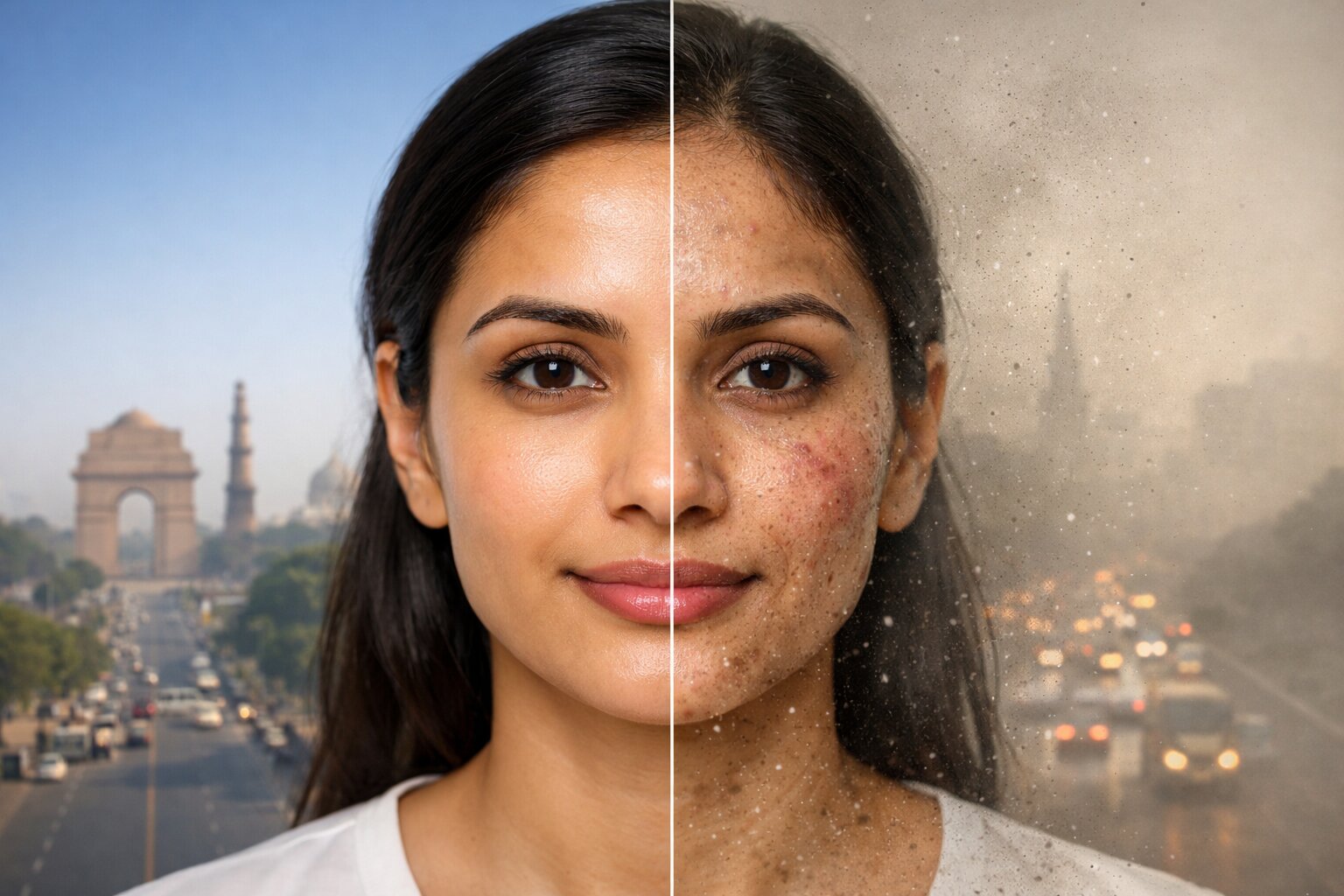
Air pollution is no longer just a respiratory concern. It is a major skin health issue, especially in urban environments. Daily exposure to dust, smoke, vehicle emissions, and industrial pollutants can silently damage the skin, leading to acne, pigmentation, sensitivity, and premature aging.
Understanding how pollution affects the skin is the first step toward protecting it.
What Is Pollution and Why Is It Harmful to Skin?
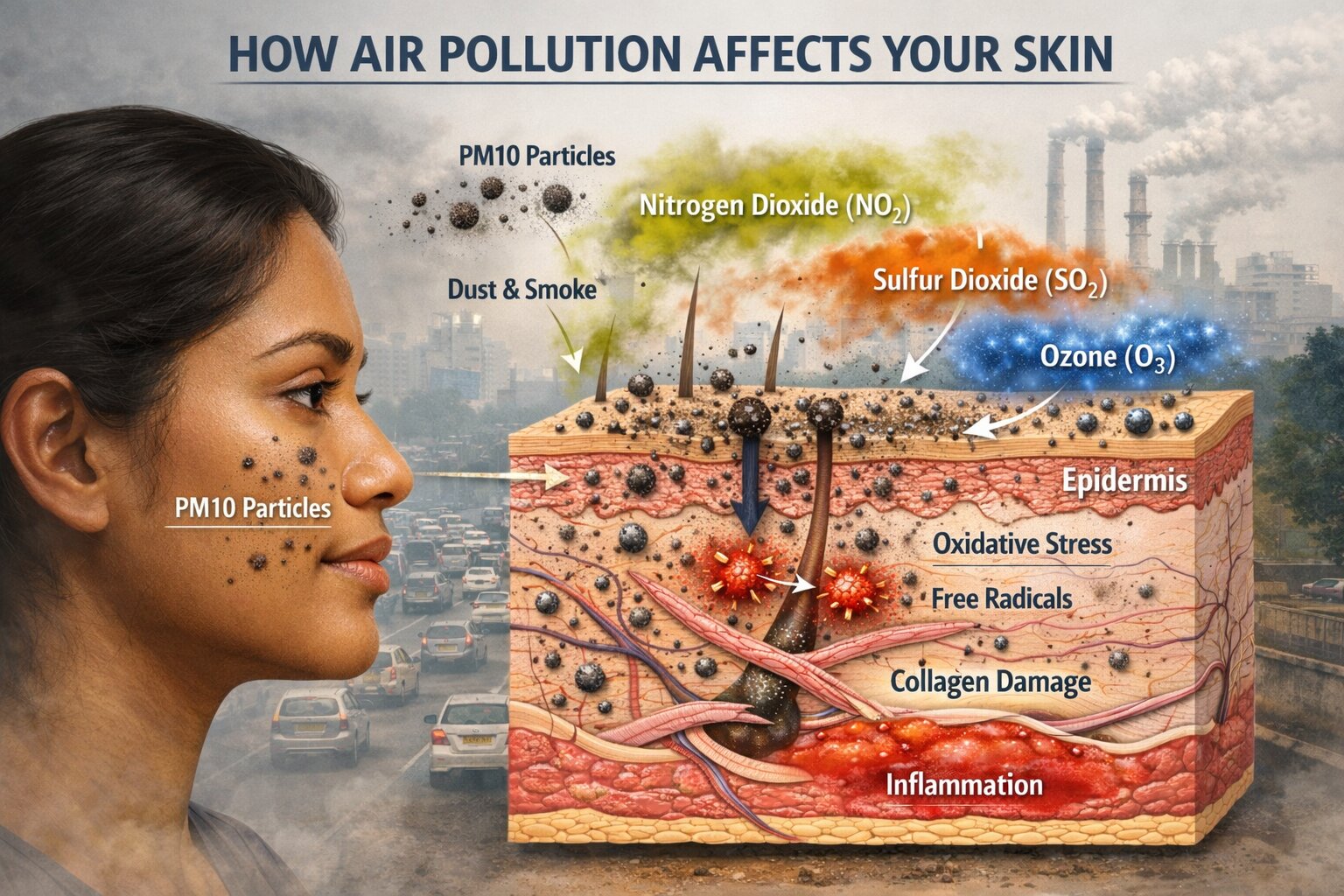
Air pollution consists of:
- Particulate matter (PM2.5 and PM10)
- Nitrogen dioxide and sulfur dioxide
- Ozone and heavy metals
- Smoke and chemical residues
These particles are small enough to penetrate the skin barrier, triggering oxidative stress and inflammation.
Key Insight
Pollution does not just sit on the skin. It can pass through a weakened barrier and trigger inflammatory pathways beneath the surface.
How Pollution Damages the Skin Barrier
Pollutants affect the skin by:
- Generating free radicals
- Disrupting the natural lipid barrier
- Increasing transepidermal water loss (TEWL)
- Activating inflammatory pathways
Over time, this weakens skin defenses and increases sensitivity.
Common Skin Problems Linked to Pollution
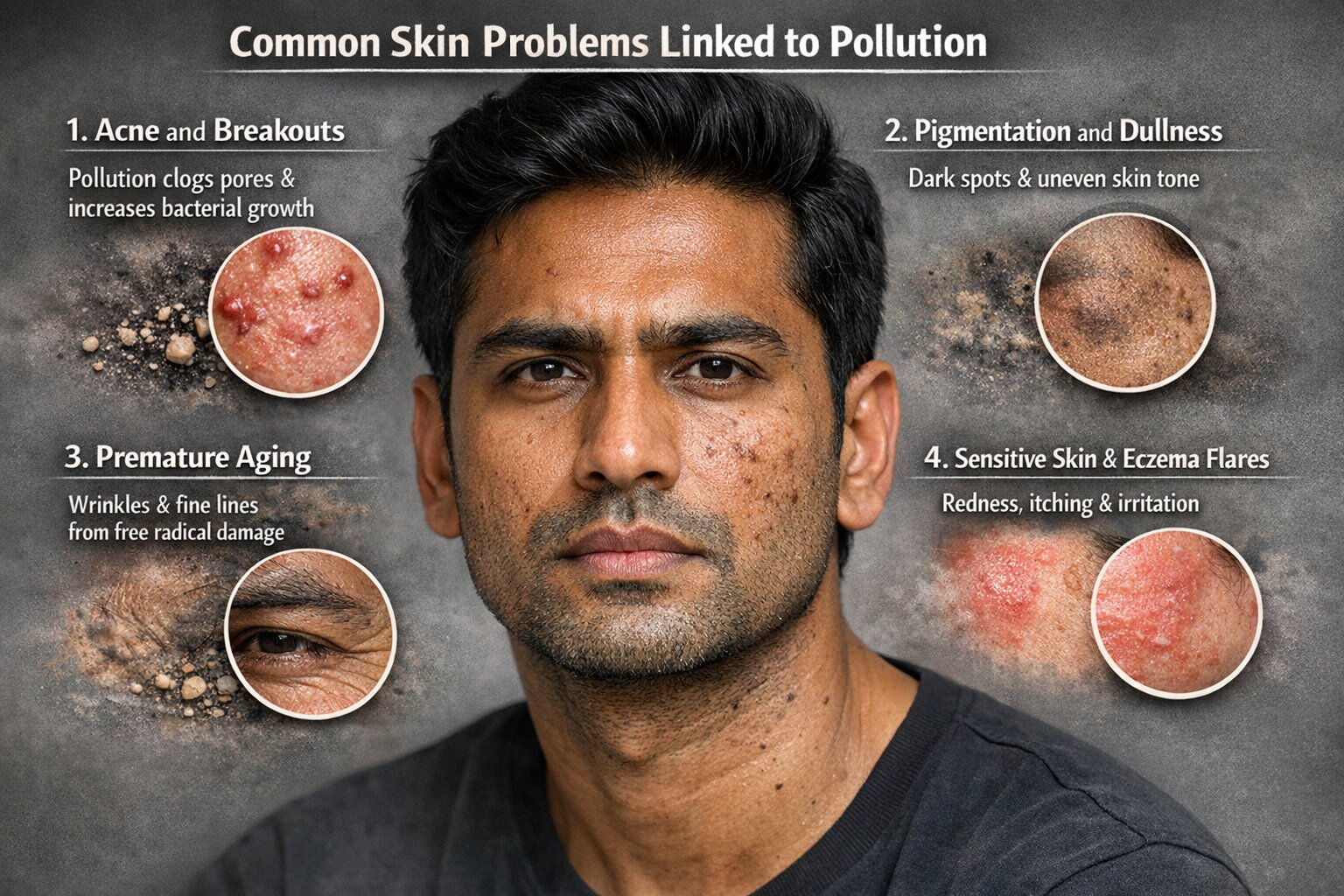
1. Acne and Breakouts
Pollution particles mix with sebum, clog pores, and increase bacterial growth, leading to persistent acne.
2. Pigmentation and Dullness
Inflammation from pollution stimulates melanocytes, worsening pigmentation and uneven skin tone.
3. Premature Aging
Free radical damage breaks down collagen and elastin, accelerating fine lines and wrinkles.
4. Sensitive Skin and Eczema Flares
Pollution aggravates existing skin conditions, causing itching, redness, and flare ups.
Signs Your Skin Is Being Affected by Pollution
You may notice:
- Increased oiliness or breakouts
- Persistent dullness despite skincare
- Redness or stinging after washing
- Dark spots worsening over time
- Skin feeling rough or congested
These are often signs of barrier damage rather than just "bad skin."
How to Protect Your Skin from Pollution
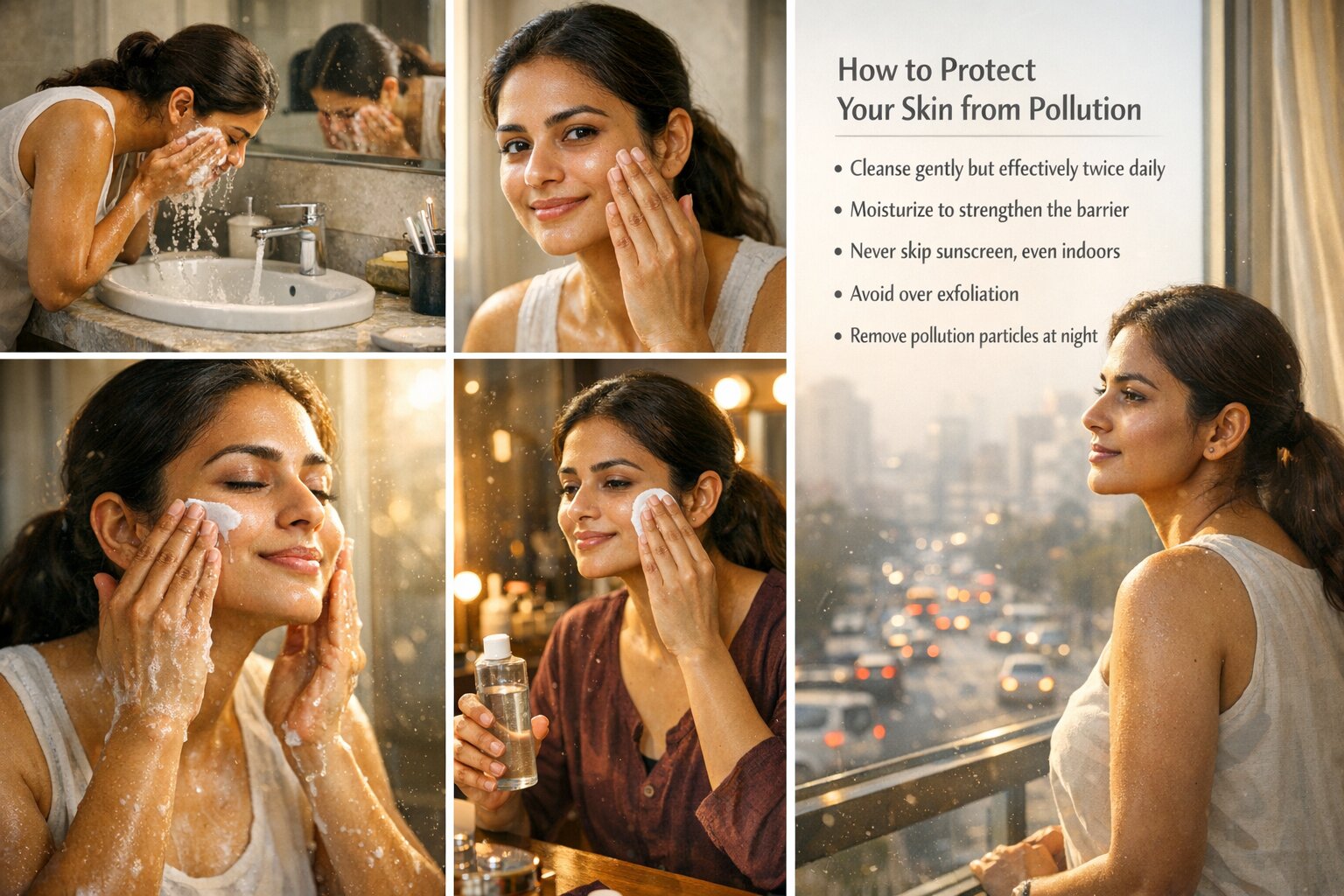
- Cleanse gently but effectively twice daily
- Moisturize to strengthen the barrier
- Never skip sunscreen, even indoors
- Avoid over exfoliation
- Remove pollution particles at night
Pro Tip
Consistency matters more than complexity. A simple routine done daily protects better than many products used occasionally.
Skincare Ingredients That Help Fight Pollution Damage
- Antioxidants: vitamin C, vitamin E, niacinamide
- Barrier repair: ceramides, cholesterol, glycerin
- Anti inflammatory: green tea, centella
These should be part of a consistent routine, not occasional use.
Common Myths about Pollution and Skin Care
- "Washing your face multiple times prevents pollution damage" - over washing worsens dryness.
- "Pollution only affects oily skin" - dry and sensitive skin are equally vulnerable.
- "Indoor skin is safe from pollution" - indoor air pollution also impacts skin health.
When Should You See a Dermatologist?
Consult a dermatologist if:
- Acne or pigmentation worsens despite good skincare
- Skin becomes persistently sensitive or irritated
- Eczema flares frequently
- You notice early aging changes prematurely
Targeted treatment helps reverse damage before it becomes chronic.
Final Thoughts
Pollution is an unavoidable part of modern life, but skin damage does not have to be. With the right skincare routine and professional guidance, you can protect your skin barrier, reduce inflammation, and maintain healthy skin despite environmental exposure.
Healthy skin in polluted environments requires prevention, protection, and consistency.
Concerned About Pollution Related Skin Problems?
A personalized dermatological assessment can help protect and repair your skin effectively.
Schedule Your ConsultationCan pollution really cause acne?
Yes. Pollution particles mix with sebum, clog pores, and increase bacteria, which can trigger breakouts.
Is sunscreen necessary if I stay indoors?
Yes. UV rays and visible light can penetrate windows and amplify pollution induced damage.
How often should I cleanse in polluted environments?
Cleanse twice daily with a mild cleanser to remove particles without stripping the skin barrier.
Which ingredients are most helpful for protection?
Antioxidants (vitamin C, vitamin E, niacinamide) and barrier repair ingredients (ceramides, glycerin) are key.