Collagen powders. Biotin tablets. Glutathione capsules. Hair gummies. The supplement market for skin and hair has exploded in recent years.
But do these supplements actually work? Here is a clear guide to separate science from hype.
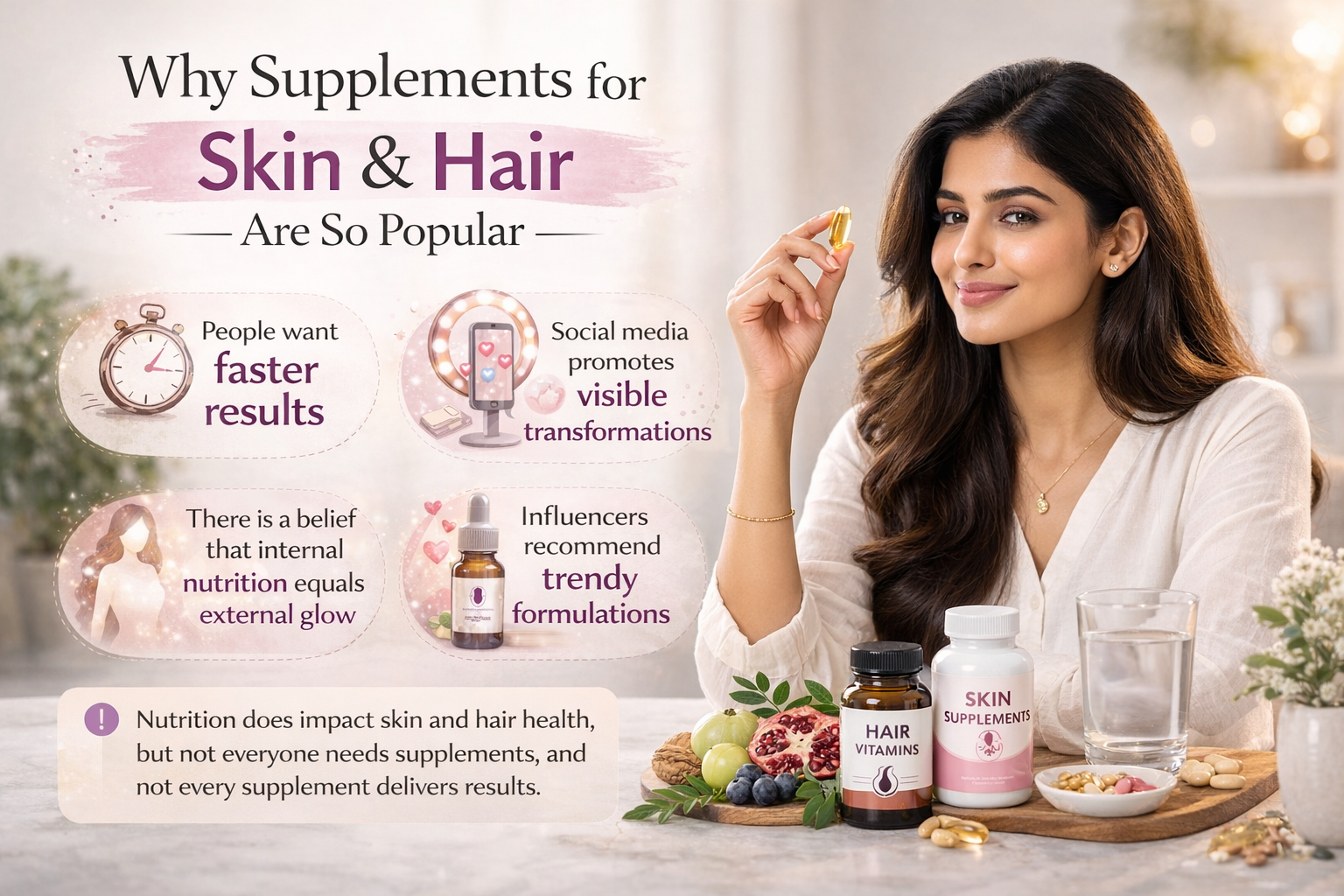
Why Supplements for Skin and Hair Are So Popular
- People want faster results
- There is a belief that internal nutrition equals external glow
- Social media promotes visible transformations
- Influencers recommend trendy formulations
Nutrition does impact skin and hair health, but not everyone needs supplements, and not every supplement delivers results.
Supplements for Skin: What Works and What Does Not
1. Collagen Supplements
Some studies show modest improvement in hydration and elasticity after 8 to 12 weeks. Effects are mild, results vary, and they do not replace sunscreen or anti aging skincare.
For a deeper dive, see Collagen for Skin and Hair.
2. Vitamin C
Supports collagen production and acts as an antioxidant. Topical vitamin C is often more effective for pigmentation and glow.
3. Glutathione
Evidence for oral glutathione improving pigmentation is limited and inconsistent. It should not be used casually without supervision.
4. Vitamin E and Antioxidants
Helpful in oxidative stress, but routine supplementation without deficiency offers minimal added benefit.
5. Omega 3 Fatty Acids
May help reduce inflammation in acne, eczema, and psoriasis in selected cases.
Supplements for Hair: What Actually Helps
Hair health depends on nutrition, hormones, stress, and genetics. Supplements help only when there is a deficiency.
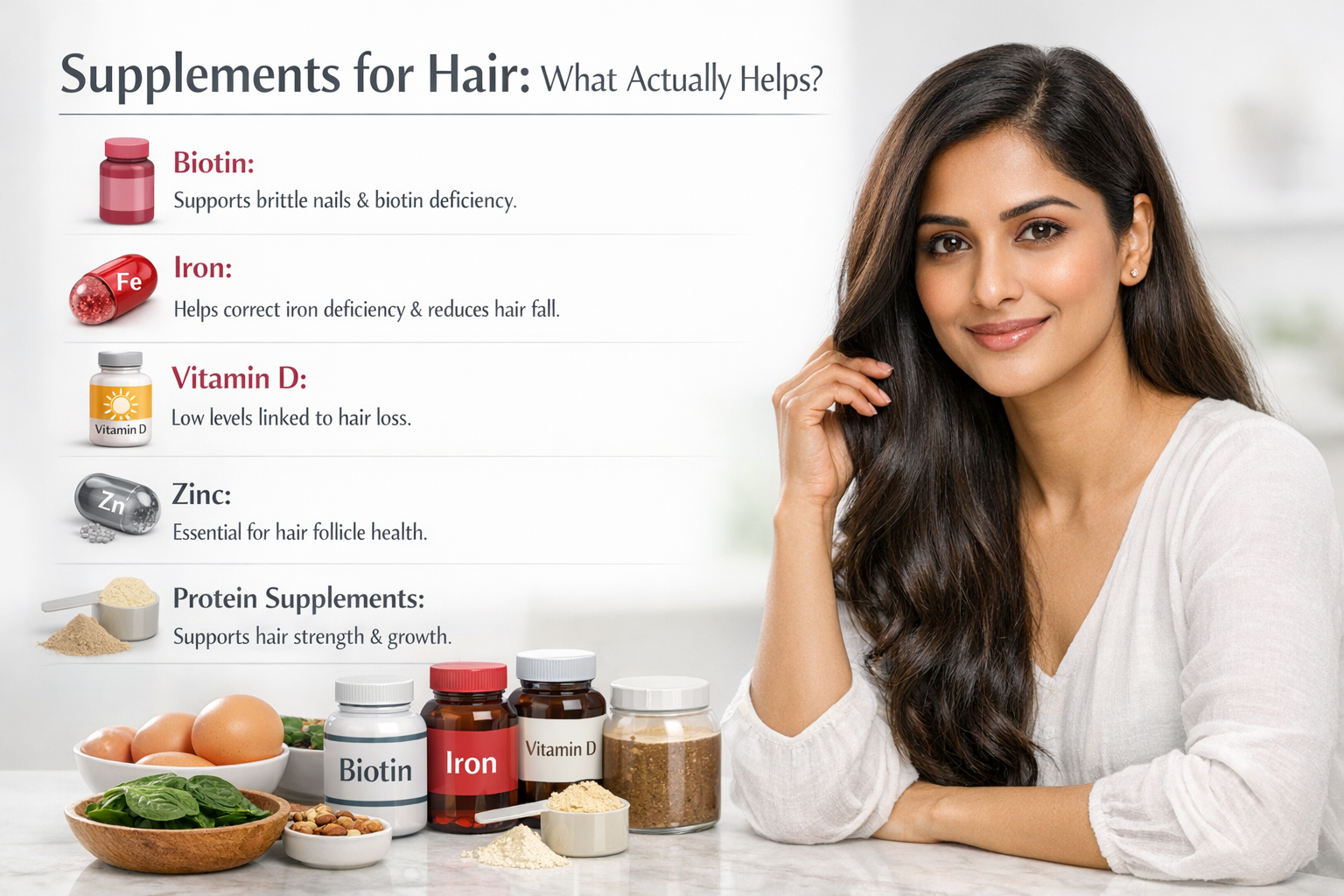
1. Biotin
Useful in true biotin deficiency and brittle nails. High dose biotin usually does not improve hair growth in people without deficiency.
2. Iron
Iron deficiency is a common cause of hair fall in women. Correcting low ferritin can reduce shedding. Testing before supplementation is important.
3. Vitamin D
Low vitamin D is linked to telogen effluvium and alopecia areata. Supplementation helps when levels are low.
4. Zinc
Important for hair follicle function. Useful in deficiency related hair loss.
5. Protein Supplements
Hair is made of keratin, a protein. Low protein intake can worsen hair fall. Diet correction is often more effective than random supplements.
When Do Supplements Actually Help?
- There is a documented deficiency
- Hair fall is nutritional
- Recovery from illness has affected hair or skin
- Skin barrier issues are linked to poor diet
Supplements are supportive tools and not primary treatments.
When Supplements Will Not Work
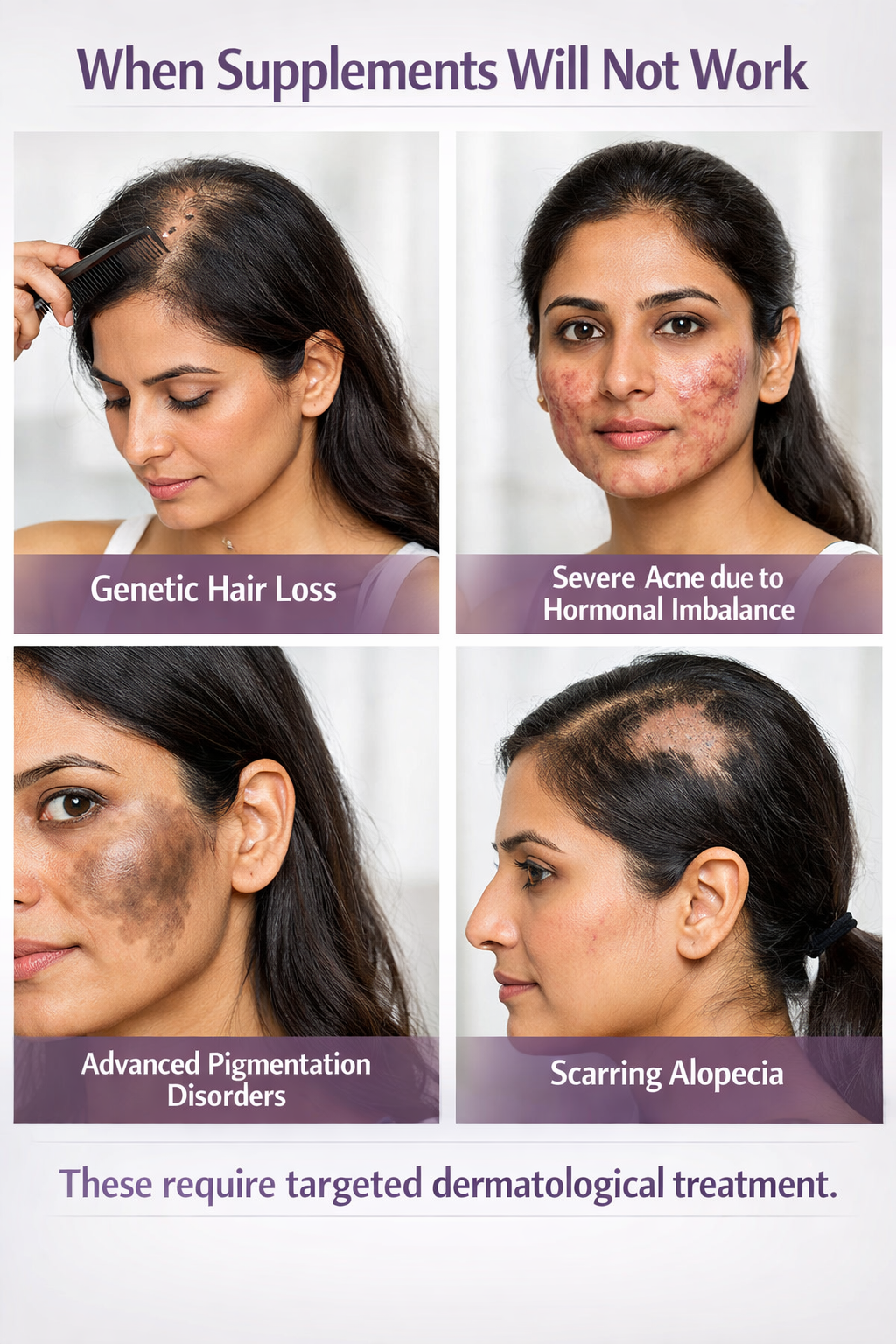
- Genetic hair loss
- Severe acne due to hormonal imbalance
- Advanced pigmentation disorders
- Scarring alopecia
These require targeted dermatological treatment.
Common Myths About Skin and Hair Supplements
- "If one tablet works, two will work faster" - excess supplementation can cause side effects.
- "Natural supplements are always safe" - herbal products can interact with medications.
- "Supplements alone can replace skincare" - topical treatments and medical care remain essential.
Risks of Unnecessary Supplementation
- Strain on liver function
- Acne flare ups from high dose B vitamins
- Hormonal disturbances
- Masking underlying medical problems
The Dermatologist's Approach to Supplements
- Clinical evaluation
- Targeted blood tests if indicated
- Identifying deficiencies
- Prescribing appropriate doses
- Monitoring response
Personalization is key.
Final Thoughts
Skin and hair supplements can be helpful when used correctly and for the right reasons. They are not shortcuts to glowing skin or thick hair.
Balanced nutrition, good skincare habits, stress management, and proper medical treatment remain the foundation.
Experiencing Hair Fall or Skin Concerns?
A professional evaluation can determine whether supplements are necessary or if a different treatment is needed.
Schedule Your ConsultationDo supplements work without a deficiency?
In most cases, benefits are minimal without a documented deficiency. Testing helps guide decisions.
Can supplements replace skincare?
No. Supplements are supportive. Sunscreen, topical care, and medical treatments remain essential.
Is biotin always useful for hair?
Biotin helps in true deficiency. High dose use without deficiency rarely improves hair growth.
When should I see a dermatologist?
If hair fall or skin concerns persist, a dermatologist can identify causes and target treatment safely.